Installation quality affects seals, bearings, rod surface and machine structure. A new cylinder should move through its full stroke without being forced into alignment by pins, hoses or mounting bolts.
Verify Mechanical Alignment
Pins should enter freely; clevises should not be squeezed; spherical joints must articulate as intended. The rod should not correct a misaligned frame. External machine stops should absorb external end loads unless the design explicitly says otherwise.
Prepare Hydraulic Connections
Clean hoses and ports, confirm the thread/seal type and route hoses so they do not pull, rub or kink through complete motion.
Commission at Controlled Speed
Begin with reduced load and controlled speed where the machine procedure allows. Bleed air using the machine method, watch for stick-slip and inspect for leakage or pressure spikes.
Record a Baseline
Record normal pressure, cycle time and any position-specific motion changes. A baseline makes later diagnostics faster.
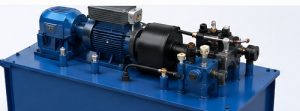
EP-HPU-DC Series Compact DC Hydraulic Power Unit
EP-HPU-DC configurable compact hydraulic power unit for battery or vehicle-powered cylinder circuits.
EP-HPU-AC Series AC Hydraulic Power Unit
EP-HPU-AC configurable AC hydraulic power unit for stationary industrial cylinder systems.
EP-HPU-SYS Series Custom Hydraulic Power Unit & Valve System
EP-HPU-SYS custom hydraulic power unit and valve-manifold system configured around the cylinder circuit and duty.
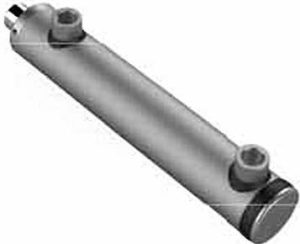
EP-KWA Series Metric Double-Acting Hydraulic Cylinder
EP-KWA metric double-acting cylinder series with bore, rod, stroke, outside diameter, length, port and weight data.
Frequently Asked Questions
Should pins need force during assembly?
No; binding is a reason to verify alignment and dimensions.
Why cycle slowly first?
It reveals interference, hose issues, trapped air or end-of-stroke problems before full load.
Can ports be identified by appearance?
Confirm thread and sealing method instead of relying on appearance.
What causes jerky motion after installation?
Air, restriction, friction, misalignment or valve behavior can contribute.
What baseline data is useful?
Pressure, cycle time, load condition and temperature where relevant.
Discuss Your Hydraulic Requirement
Send bore, stroke, mounting, pressure, ports, load and duty details. For replacements, include photos and critical measurements.