Troubleshooting is fastest when you record exactly when the symptom appears, which direction is affected and what pressure and flow the circuit is producing at that moment. Those observations help separate cylinder faults from valve, pump and mechanical causes.
Start With Direction and Load
Note whether the problem occurs during extension, retraction, holding, cold start or only under a specific load. One-direction symptoms often point toward annular-area effects, direction-specific restrictions or load geometry rather than a universal cylinder fault.
Drift: Prove Where Oil Is Moving
Position loss can come from internal cylinder bypass or from the valve and load-holding circuit. Use the equipment manufacturer’s safe diagnostic method to isolate the circuit; never block or disconnect a circuit while an unsupported load can move.
Slow Motion: Compare Pressure and Flow
A cylinder that reaches force but moves slowly may be flow-limited. A cylinder that stalls without reaching expected pressure may have a supply, relief or control issue. Temperature-dependent symptoms can also point to viscosity and restriction.
Repeated Leakage: Inspect the Hardware Around the Seal
Look for rod scoring, corrosion, bearing play, misaligned pins and signs of impact. A seal replaced into the same mechanical problem often fails again.
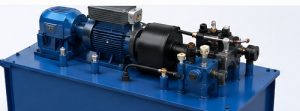
EP-HPU-DC Series Compact DC Hydraulic Power Unit
EP-HPU-DC configurable compact hydraulic power unit for battery or vehicle-powered cylinder circuits.
EP-HPU-AC Series AC Hydraulic Power Unit
EP-HPU-AC configurable AC hydraulic power unit for stationary industrial cylinder systems.
EP-HPU-SYS Series Custom Hydraulic Power Unit & Valve System
EP-HPU-SYS custom hydraulic power unit and valve-manifold system configured around the cylinder circuit and duty.
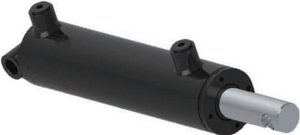
EP-WP Series 3000 PSI Welded Through-Hole Hydraulic Cylinder
EP-WP welded through-hole cylinder series with model dimensions, pressure, column-load and port data.
Frequently Asked Questions
What should I record before changing parts?
Direction, load, pressure, cycle time, oil temperature when relevant, and the exact point in the cycle where the symptom appears.
Can valve leakage make a good cylinder drift?
Yes. The load-holding path must be checked before concluding that the piston seals are bypassing.
Why can a cylinder be slow only when cold?
Higher oil viscosity can increase pressure loss through hoses, valves and filters, reducing available flow.
What does a bent or scored rod indicate?
It can indicate impact, side load, contamination or guidance problems that may also damage seals and bearings.
When should the power unit be included in diagnosis?
Whenever pressure, flow, temperature or duty may be limiting motion or force.
Send a Troubleshooting Record
Include the symptom timeline, pressure readings, load condition, circuit sketch and close photos of leakage or mechanical damage.