Hydraulic cylinder sizing starts by converting machine load into the thrust required at the worst geometry. Pressure and piston area set theoretical force; pressure loss, friction, acceleration and a design margin must be considered before selecting a bore.
Push Force From Bore and Pressure
For extension on full piston area, theoretical force equals pressure multiplied by piston area. Use pressure expected at the cylinder during the working stroke, not the relief setting as though it were guaranteed continuous pressure.
| Input | Engineering question | RFQ field |
|---|---|---|
| Required push force | What thrust is needed at the worst linkage angle? | Maximum working load + geometry |
| System pressure | What pressure is available at the cylinder? | Normal pressure + relief setting |
| Stroke | What travel is required? | Stroke + retracted envelope |
| Speed | How fast must it move under load? | Extend/retract time or velocity |
Retraction Uses Annulus Area
Double-acting retraction uses piston area minus rod area. Retract force is lower and, for the same flow, retract speed is usually higher. Check both directions.
Check Rod Stability and Mounting
Long compression strokes can be limited by rod buckling before pressure rating. Effective column length changes with mounting. Side load or a misaligned clevis increases bearing and seal stress.
Translate Speed Into Flow
Required flow equals effective area multiplied by piston velocity. Multi-speed cycles may need valve logic rather than one constant-flow source.
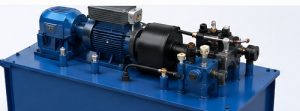
EP-HPU-DC Series Compact DC Hydraulic Power Unit
EP-HPU-DC configurable compact hydraulic power unit for battery or vehicle-powered cylinder circuits.
EP-HPU-AC Series AC Hydraulic Power Unit
EP-HPU-AC configurable AC hydraulic power unit for stationary industrial cylinder systems.
EP-HPU-SYS Series Custom Hydraulic Power Unit & Valve System
EP-HPU-SYS custom hydraulic power unit and valve-manifold system configured around the cylinder circuit and duty.
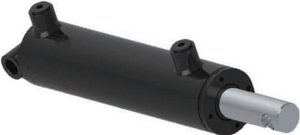
EP-WP Series 3000 PSI Welded Through-Hole Hydraulic Cylinder
EP-WP welded through-hole cylinder series with model dimensions, pressure, column-load and port data.
Frequently Asked Questions
Should I size from relief-valve pressure?
Use expected working pressure at the cylinder; treat relief setting as a protection limit.
Why is retract force lower?
The rod removes part of the rod-side pressure area.
Does a larger bore always solve a force problem?
It also raises flow demand and may exceed the installation envelope.
When does rod buckling matter?
When a long slender rod carries compression over a large effective length.
What dimensions belong in a sizing request?
Force or bore target, stroke, closed envelope, mounts, pins/flange, ports and load geometry.
Discuss Your Hydraulic Requirement
Send bore, stroke, mounting, pressure, ports, load and duty details. For replacements, include photos and critical measurements.