Product Description
Product Description
100 ton hydraulic press cylinder
The color and flange can be customized!
Hydraulic cylinder is powered by ZB series of high pressure electric oil pumps, the function is for oil pressure rebound, and overflow, it is designed as a safe protect pressurizer, and it can protect emergent over pressure, especially construction can protect the cylinder.
Hydraulic cylinder can bear partial loading is 5% of rated pressure. High pressure alloy cylinder is very durable, especially in larger projects, it is easy to be operated and controlled. It has large output, lightweight, remote control, and other advantages, it can match with our high pressure oil pump, it can reach jack, push, pull and extrusion and kinds of work.
Parametri del prodotto
| Model | Tonnage T |
Colpo B-A mm |
Cloase height A mm |
Extend height B mm |
Outer diameter of oil cylinder mm |
Dimension of plunger mm |
Dimension of oil pump mm |
Weight kg |
Pressure | Recommend electric oil pump |
| STQ50-100 | 50 | 100 | 225 | 325 | 127 | 70 | 100 | 35 | 63MPA | 50T-200T 0.55KW 0.75KW 1.5KW 3KW 4KW 5.5KW |
| STQ50-160 | 160 | 285 | 445 | 39 | ||||||
| STQ50-200 | 200 | 325 | 525 | 46 | ||||||
| STQ50-300 | 300 | 425 | 725 | 48 | ||||||
| STQ50-500 | 500 | 625 | 1125 | 63 | ||||||
| STQ100-100 | 100 | 100 | 250 | 350 | 180 | 100 | 140 | 58 | 63MPA | |
| STQ100-160 | 160 | 310 | 470 | 63 | ||||||
| STQ100-200 | 200 | 350 | 550 | 78 | ||||||
| STQ100-300 | 300 | 450 | 750 | 96 | ||||||
| STQ100-500 | 500 | 650 | 1150 | 130 | ||||||
| STQ150-100 | 150 | 100 | 260 | 360 | 219 | 125 | 180 | 58 | 63MPA | |
| STQ150-160 | 160 | 320 | 480 | 69 | ||||||
| STQ150-200 | 200 | 360 | 560 | 86 | ||||||
| STQ150-300 | 300 | 460 | 760 | 103 | ||||||
| STQ150-500 | 500 | 660 | 1160 | 255 | ||||||
| STQ200-100 | 200 | 100 | 285 | 385 | 240 | 150 | 200 | 96 | 63MPA | |
| STQ200-160 | 160 | 345 | 505 | 103 | ||||||
| STQ200-200 | 200 | 385 | 585 | 116 | ||||||
| STQ200-300 | 300 | 485 | 785 | 161 | ||||||
| STQ200-500 | 500 | 685 | 1185 | 221 | ||||||
| STQ320-100 | 320 | 100 | 310 | 410 | 330 | 180 | 250 | 196 | 63MPA | 1.5KW 3KW 4KW 5.5KW |
| STQ320-160 | 160 | 370 | 530 | 240 | ||||||
| STQ320-200 | 200 | 410 | 610 | 258 | ||||||
| STQ320-300 | 300 | 510 | 810 | 311 | ||||||
| STQ320-500 | 500 | 710 | 1210 | 456 | ||||||
| STQ400-100 | 400 | 100 | 355 | 455 | 380 | 200 | 290 | 198 | 63MPA | 3KW 4KW 5.5KW 7.5KW |
| STQ400-160 | 160 | 415 | 575 | 231 | ||||||
| STQ400-200 | 200 | 460 | 660 | 264 | ||||||
| STQ400-300 | 300 | 555 | 855 | 367 | ||||||
| STQ400-500 | 500 | 755 | 1255 | 456 | ||||||
| STQ500-100 | 500 | 100 | 360 | 460 | 430 | 200 | 320 | 323 | 63MPA | 3KW 4KW 5.5KW 7.5KW |
| STQ500-160 | 160 | 420 | 580 | 330 | ||||||
| STQ500-200 | 200 | 460 | 660 | 420 | ||||||
| STQ500-300 | 300 | 560 | 860 | 581 | ||||||
| STQ500-500 | 500 | 760 | 1260 | 599 | ||||||
| STQ630-100 | 630 | 100 | 417 | 517 | 500 | 250 | 360 | 560 | 63MPA | 4KW 5.5KW 7.5KW 11KW |
| STQ630-160 | 160 | 477 | 637 | 633 | ||||||
| STQ630-200 | 200 | 517 | 717 | 696 | ||||||
| STQ630-300 | 300 | 617 | 917 | 898 | ||||||
| STQ630-500 | 500 | 817 | 1317 | 1250 | ||||||
| STQ800-100 | 800 | 100 | 488 | 588 | 560 | 300 | 400 | 896 | 63MPA | 7.5KW 11KW |
| STQ800-200 | 200 | 598 | 798 | 1040 | ||||||
| STQ800-300 | 300 | 698 | 998 | 1380 | ||||||
| STQ800-500 | 500 | 898 | 1398 | 1520 | ||||||
| STQ1000-100 | 1000 | 100 | 530 | 630 | 600 | 320 | 450 | 1286 | 63MPA | 7.5KW 11KW |
| STQ1000-200 | 200 | 630 | 830 | 1332 | ||||||
| STQ1000-300 | 300 | 760 | 1060 | 1663 |
If the model you need is not in the form, please contact us. We can customize it according to your project!
Product Application
Our hydraulic cylinders have been widely used in industrial fields, such as steel plants, the cement industry, chemical and refinery, bridges, railways, highways, hydropower stations, ship repair, building, construction, and maintenance.
Company Profile
HangZhou Lead Equipment Co., Ltd. Has been in hydraulic tools industry since 2009.
Our main products are as follows:
Single acting hydraulic jack/cylinder/ram (10-100 tons)
Single acting hollow hydraulic jack/cylinder/ram (12-100 tons)
Double acting hydraulic jack/cylinder/ram (50-2000 tons)
Double acting hollow hydraulic jack/cylinder/ram (50-2000 tons)
Single acting hydraulic jack/cylinder/ram with lock nut (55-200 tons)
Thin type single acting hydraulic jack/cylinder/ram (10-200 tons)
Ultrathin hydraulic jack/cylinder/ram (10-200 tons)
Flange type hydraulic jack/cylinder/ram (10-630 tons)
Synchronous hydraulic jack (10-1000 tons)
Hydraulic accessories: high pressure oil hose, couplers, seal kits, manifolds, etc.
All the tonnage, stroke, and height can be customized according to client’s requirements, supplying the best quality and service. Our warranty is 2 years.
| Certification: | CE, SGS |
|---|---|
| Pressure: | 63MPa |
| Work Temperature: | Normal Temperature |
| Acting Way: | Double Acting |
| Working Method: | – |
| Adjusted Form: | – |
| Samples: |
US$ 3000/Piece
1 Piece(Min.Order) | |
|---|
| Customization: |
Available
|
|
|---|
Ci sono tendenze emergenti nella tecnologia dei cilindri idraulici, come ad esempio le funzionalità intelligenti?
Sì, ci sono diverse tendenze emergenti nella tecnologia dei cilindri idraulici, tra cui l'integrazione di funzionalità intelligenti. Man mano che le industrie continuano ad adottare tecnologie avanzate e a ricercare una maggiore efficienza, i cilindri idraulici vengono dotati di funzionalità innovative per migliorarne le prestazioni e offrire ulteriori vantaggi. Ecco alcune delle tendenze emergenti nella tecnologia dei cilindri idraulici:
1. Integrazione dei sensori:
– Una delle tendenze più significative nella tecnologia dei cilindri idraulici è l'integrazione dei sensori. I sensori possono essere integrati nel cilindro idraulico per monitorare vari parametri come pressione, temperatura, posizione e carico. Questi sensori forniscono dati in tempo reale, consentendo il monitoraggio delle condizioni, la manutenzione predittiva e un migliore controllo operativo. Raccogliendo e analizzando i dati, gli operatori possono ottimizzare le prestazioni dei sistemi idraulici, rilevare in anticipo potenziali problemi e prevenirne i guasti, con conseguente aumento dell'affidabilità e riduzione dei tempi di fermo.
2. Connettività e IoT:
– I cilindri idraulici vengono integrati nell'ecosistema dell'Internet of Things (IoT), consentendo la connettività e lo scambio di dati. Collegando i cilindri idraulici a una rete, gli operatori possono monitorarne e controllarne le prestazioni da remoto. I cilindri idraulici abilitati all'IoT facilitano funzionalità come la diagnostica remota, l'ottimizzazione delle prestazioni e la manutenzione predittiva. L'aspetto della connettività consente una migliore integrazione con i sistemi complessivi delle apparecchiature e consente un processo decisionale basato sui dati, migliorando l'efficienza e la produttività.
3. Progetti ad alta efficienza energetica:
– Con la crescente attenzione alla sostenibilità e all'efficienza energetica, la tecnologia dei cilindri idraulici si sta evolvendo per incorporare funzionalità di risparmio energetico. I produttori stanno sviluppando cilindri idraulici con tecnologie di tenuta migliorate, attrito ridotto e dinamica del flusso dei fluidi ottimizzata. Questi progressi riducono al minimo le perdite di energia e aumentano l'efficienza complessiva del sistema. I cilindri idraulici a basso consumo energetico contribuiscono a ridurre il consumo energetico, i costi operativi e l'impatto ambientale.
4. Materiali e rivestimenti avanzati:
– L'utilizzo di materiali e rivestimenti avanzati è un'altra tendenza emergente nella tecnologia dei cilindri idraulici. I produttori stanno esplorando materiali leggeri, come compositi e leghe, per ridurre il peso complessivo dei cilindri idraulici senza comprometterne la resistenza e la durata. Inoltre, vengono applicati rivestimenti e trattamenti superficiali specializzati per migliorarne la resistenza alla corrosione, all'usura e la durata. Questi progressi aumentano la longevità e l'affidabilità dei cilindri idraulici, in particolare in ambienti difficili.
5. Sistemi di controllo intelligenti:
– La tecnologia dei cilindri idraulici sta abbracciando sistemi di controllo intelligenti che ottimizzano le prestazioni e abilitano funzionalità avanzate. Questi sistemi utilizzano algoritmi, apprendimento automatico e intelligenza artificiale per automatizzare i processi, adattarsi alle mutevoli condizioni e ottimizzare i movimenti dei cilindri idraulici. I sistemi di controllo intelligenti possono regolare i parametri in tempo reale, garantendo un funzionamento preciso ed efficiente. Questa tendenza consente una maggiore automazione, una maggiore produttività e una maggiore sicurezza nelle applicazioni dei sistemi idraulici.
6. Manutenzione predittiva:
– La manutenzione predittiva sta acquisendo importanza nella tecnologia dei cilindri idraulici. Utilizzando i dati raccolti da sensori e sistemi di monitoraggio, gli algoritmi di manutenzione predittiva possono analizzare le condizioni e le prestazioni dei cilindri idraulici. Questa analisi aiuta a identificare in anticipo potenziali guasti o degrado, consentendo azioni di manutenzione proattive. La manutenzione predittiva riduce i tempi di fermo non pianificati, prolunga la durata dei cilindri idraulici e ottimizza i programmi di manutenzione, con conseguente risparmio sui costi e maggiore disponibilità delle attrezzature.
7. Funzionalità di sicurezza avanzate:
– La tecnologia dei cilindri idraulici sta integrando funzionalità di sicurezza avanzate per migliorare la sicurezza dell'operatore e delle attrezzature. Queste funzionalità includono valvole di sicurezza integrate, sistemi di monitoraggio del carico e funzionalità di arresto di emergenza. I sistemi di sicurezza nei cilindri idraulici aiutano a prevenire incidenti, proteggono dai sovraccarichi e garantiscono un funzionamento affidabile. L'integrazione di funzionalità di sicurezza avanzate contribuisce a creare ambienti di lavoro più sicuri e a garantire la conformità alle più severe normative di sicurezza.
Queste tendenze emergenti nella tecnologia dei cilindri idraulici dimostrano l'attenzione del settore verso l'innovazione, l'ottimizzazione delle prestazioni e la sostenibilità. L'integrazione di funzionalità intelligenti, connettività, materiali avanzati e capacità di manutenzione predittiva consente ai cilindri idraulici di funzionare in modo più efficiente, fornire informazioni in tempo reale e migliorare le prestazioni complessive del sistema. Con il continuo progresso tecnologico, si prevede che la tecnologia dei cilindri idraulici evolverà ulteriormente, offrendo maggiore funzionalità ed efficienza per diversi settori e applicazioni.
Utilizing Hydraulic Cylinders in Conjunction with Alternative Energy Sources
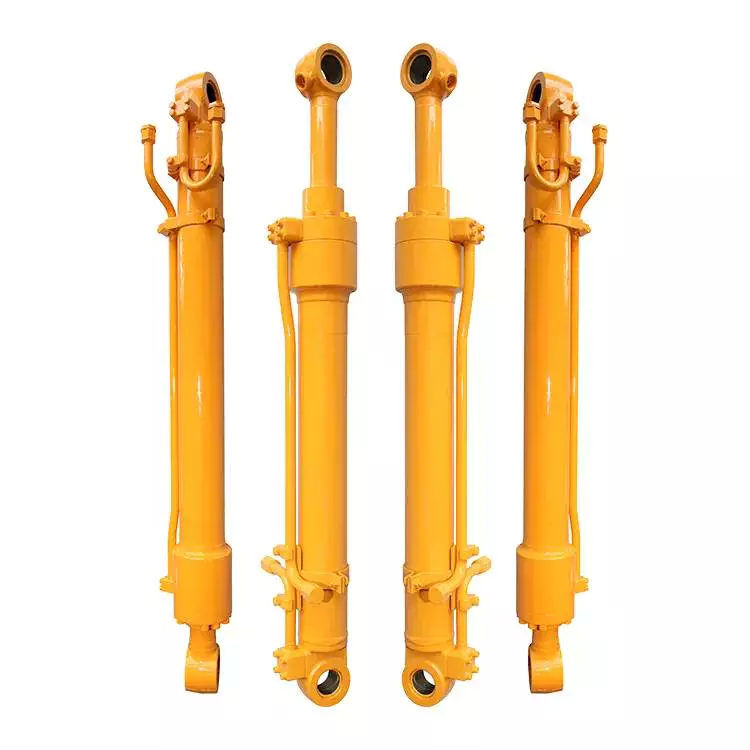
Hydraulic cylinders can indeed be used in conjunction with alternative energy sources. The versatile nature of hydraulic systems allows them to be integrated with various alternative energy technologies to enhance efficiency, control, and power generation. Let’s explore some examples of how hydraulic cylinders can be utilized alongside alternative energy sources:
- Hydraulic Energy Storage: Hydraulic cylinders can be employed in energy storage systems that utilize alternative energy sources such as renewable sources (e.g., solar or wind) or waste energy recovery. These systems convert excess energy into hydraulic potential energy by pumping fluid into a high-pressure accumulator. When the energy is needed, the pressurized fluid is released, driving the hydraulic cylinder and generating mechanical power.
- Wave and Tidal Energy Conversion: Hydraulic cylinders can be utilized in wave and tidal energy conversion systems. These systems harness the power of ocean waves or tidal currents and convert it into usable energy. Hydraulic cylinders, along with associated pumps and valves, can be used to capture and control the energy from the waves or tides, driving the cylinders and generating mechanical power or producing electricity.
- Hydroelectric Power Generation: Hydraulic cylinders play a crucial role in traditional hydroelectric power generation. However, alternative approaches such as small-scale or micro-hydropower systems can also benefit from hydraulic cylinders. These systems utilize natural or man-made water flows to drive turbines connected to hydraulic cylinders, which then convert the hydraulic energy into mechanical power or electricity.
- Hydraulic Actuation in Wind Turbines: Hydraulic cylinders can be employed in wind turbines to enhance performance and control. For example, hydraulic pitch control systems use hydraulic cylinders to adjust the pitch angle of wind turbine blades, optimizing their aerodynamic performance based on wind conditions. This allows for efficient power generation and protection against excessive wind loads.
- Geothermal Energy Extraction: Geothermal energy extraction involves utilizing the natural heat from the Earth’s interior to generate power. Hydraulic cylinders can be utilized in geothermal systems to control and regulate fluid flow, allowing for efficient extraction and utilization of geothermal energy. They can also be used in geothermal heat pumps for heating and cooling applications.
In summary, hydraulic cylinders can be effectively utilized in conjunction with alternative energy sources to enhance energy storage, power generation, and control. Whether it’s through hydraulic energy storage systems, wave and tidal energy conversion, hydroelectric power generation, hydraulic actuation in wind turbines, or geothermal energy extraction, hydraulic cylinders offer versatile and efficient solutions for harnessing and utilizing alternative energy sources.
What is a hydraulic cylinder and how does it function in various applications?
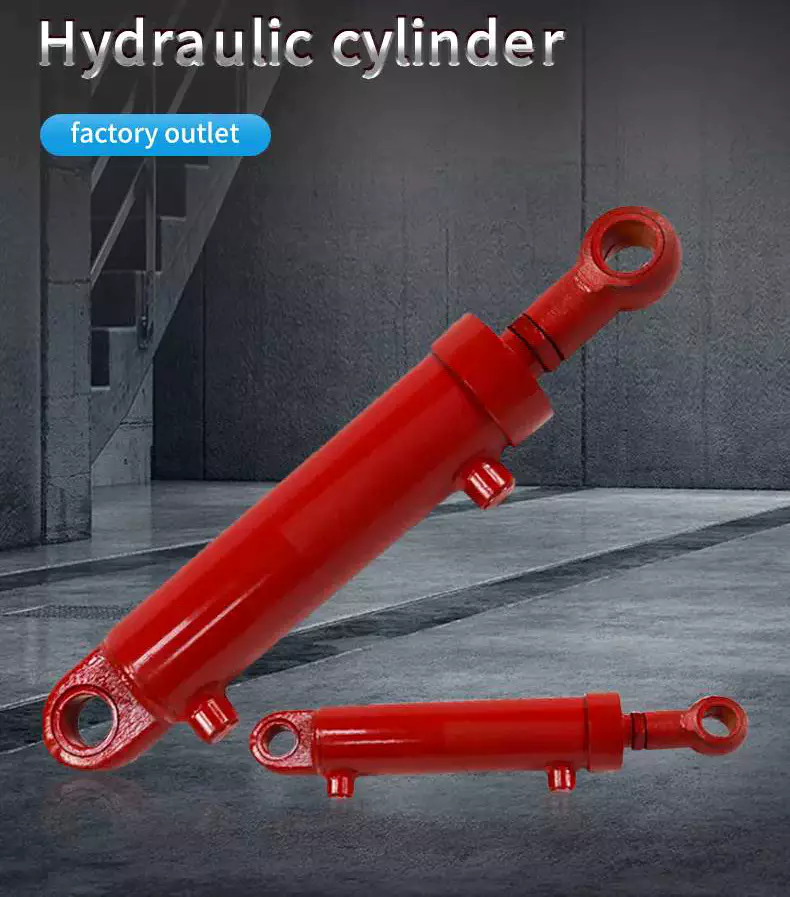
A hydraulic cylinder is a mechanical actuator that converts hydraulic energy into linear force and motion. It plays a critical role in various applications where controlled and powerful linear motion is required. Hydraulic cylinders are commonly used in industries such as construction, manufacturing, agriculture, and transportation. Here’s a detailed explanation of what a hydraulic cylinder is and how it functions:
Definition and Components:
– A hydraulic cylinder consists of a cylindrical barrel, a piston, a piston rod, and various seals. The barrel is a hollow tube that houses the piston and allows for fluid flow. The piston divides the cylinder into two chambers: the rod side and the cap side. The piston rod extends from the piston and provides a connection point for external loads. Seals are used to prevent fluid leakage and maintain hydraulic pressure within the cylinder.
Function:
– The function of a hydraulic cylinder is to convert the pressure and flow of hydraulic fluid into linear force and motion. The hydraulic fluid, typically oil, is pressurized and directed into one of the chambers of the cylinder. As the fluid enters the chamber, it applies pressure on the piston, causing it to move in a linear direction. This linear motion of the piston is transferred to the piston rod, creating a pushing or pulling force.
Working Principle:
– The working principle of a hydraulic cylinder is based on Pascal’s law, which states that pressure exerted on a fluid in a confined space is transmitted equally in all directions. In a hydraulic cylinder, when hydraulic fluid is pumped into one side of the cylinder, it creates pressure on the piston. The pressure is transmitted through the fluid to the other side of the piston, resulting in a balanced force across the piston and piston rod. This force generates linear motion in the direction determined by the fluid input.
Applications:
– Hydraulic cylinders find extensive use in a wide range of applications due to their ability to generate high forces and precise control of linear motion. Some common applications include:
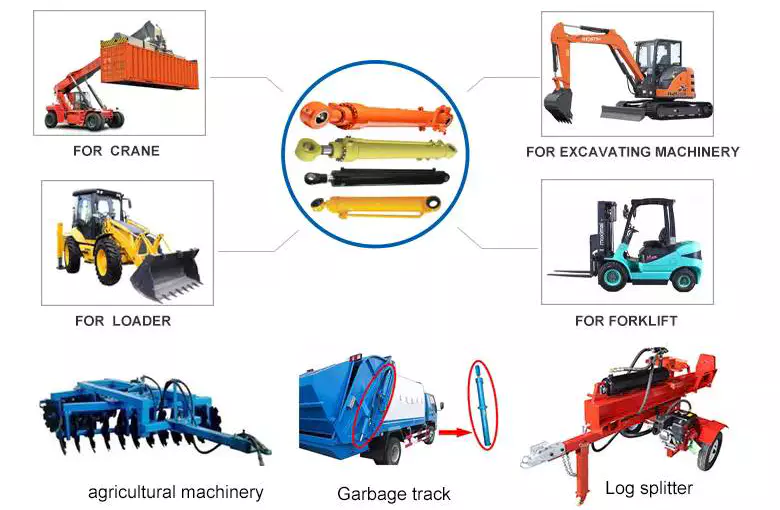
1. Construction Equipment: Hydraulic cylinders are used in excavators, loaders, bulldozers, and cranes for lifting, pushing, and digging tasks.
2. Manufacturing Machinery: Hydraulic cylinders are employed in presses, machine tools, and material handling equipment for pressing, clamping, and lifting operations.
3. Agricultural Machinery: Hydraulic cylinders are used in tractors, harvesters, and irrigation systems for tasks like steering, lifting, and controlling attachments.
4. Transportation: Hydraulic cylinders are utilized in vehicles such as dump trucks, garbage trucks, and forklifts for tilting, lifting, and tipping operations.
5. Aerospace and Defense: Hydraulic cylinders are employed in aircraft landing gear, missile systems, and hydraulic actuators for control surfaces.
6. Marine and Offshore: Hydraulic cylinders are used in ship steering systems, cranes, and offshore drilling equipment for various lifting and positioning tasks.
In these applications, hydraulic cylinders offer advantages such as high force capability, precise control, compact size, and durability. They provide efficient and reliable linear motion, contributing to enhanced productivity and functionality in a wide range of industries.
Overall, hydraulic cylinders are integral components in various applications where controlled and powerful linear motion is required. Their ability to convert hydraulic energy into mechanical force makes them invaluable in numerous industries, enabling the operation of heavy machinery, precise positioning, and efficient load handling.


editor by CX 2023-10-31