Product Description
Products Description
FRJX,manufacturer of professional brake and suspension parts from China.All of our products are manufactured and 100% tested to meet standards of SGS.
we offer comes in various OE numbers and capabilities to meet your needs with high performance and competitive price.
| Catagory | Brake Wheel Cylinder |
| Marca | OEM /Customized/FRJX |
| Applicazione | Auto Brake Systems |
| OEM No. | 58420-45201,11U 0571 CG |
| Car Model | For Hyundai,Kia |
| Materiale | Iron/Aluminum |
| Sample | Available |
| Quantità minima d'ordine | 50-100PCS |
| Warranty | 30,000 kms/1 year |
| Quality | 100% Tested 1 by 1 before shipment |
| Packing | Plastic Bag+Color Box+Carton+Customize |
| Lead Time | 7-15 days for stock orders, 25-40 days for large quantities. |
FRJX,from high quality material to advanced processing and test equipment,all our brake and clutch parts are manufactured and 100% tested to meet standards ISO9001 and ISO/TS 16949 and SGS.
Company Introduction
In 2008, the HangZhou Fanrong Machinery Co.,Ltd was created in the city of HangZhou ,ZheJiang ,China,our vision is to produce a high quality of Brake and Suspension parts competitive prices to satisfy the needs of the auto market and gain the trust of our customers.
The supervision of our production processes is carried out by highly qualified engineers and specialists who have state-of-the-art instruments, ensuring that the final result is excellent quality products with high levels of safety, durability and performance. The adequate selection of the best quality raw materials , strict controls in the production process, make us recognized with the ISO9001 and ISO/TS 16949 certifications. Additionally, we have outstanding results in tests carried out by our customers.
We respond to the reliability and safety needs of the auto parts sector by offering the best auto parts for vehicles.Due to our high performance and competitive price,our Brake and Suspension parts production is our best-selling.
We believe our qualified products with reasonable price could save you a lot! welcome your inquiry!
Precessing Equipment
Assembly & Testing
Package & Delivery
| After-sales Service: | 1 Year |
|---|---|
| Warranty: | 1 Year |
| Type: | Brake System |
| Materiale: | Iron or Aluminum, Iron |
| Position: | Front |
| Certification: | ISO/TS16949, ISO9001, ISO9002 |
| Samples: |
US$ 5/Piece
1 Piece(Min.Order) | |
|---|
| Customization: |
Available
|
|
|---|
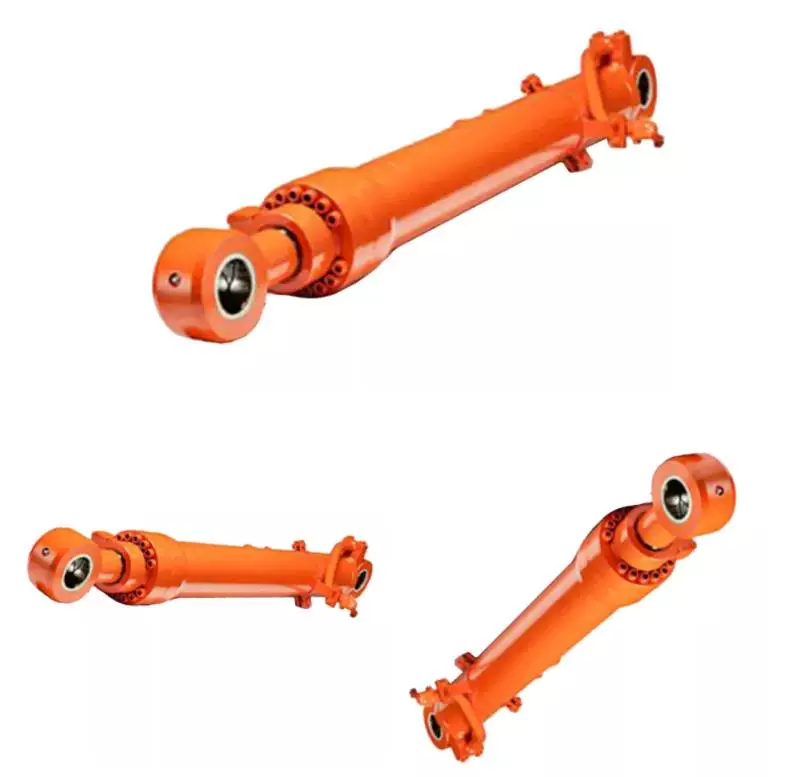
How do hydraulic cylinders enhance the performance of construction and mining equipment?
Hydraulic cylinders play a vital role in enhancing the performance of construction and mining equipment by providing powerful and precise linear motion. These industries require heavy-duty machinery that can withstand demanding conditions and efficiently perform tasks such as lifting, pushing, and digging. Here’s a detailed explanation of how hydraulic cylinders enhance the performance of construction and mining equipment:
1. Power and Force:
– Hydraulic cylinders are capable of generating substantial force, allowing construction and mining equipment to handle heavy loads and perform challenging tasks. The hydraulic system applies pressure to the fluid, which is transmitted to the hydraulic cylinder, resulting in the movement of the piston rod. The larger the diameter of the cylinder, the greater the force that can be generated. Hydraulic cylinders enable the equipment to exert significant force, making it possible to lift and move heavy materials, excavate soil and rock, and perform other demanding operations.
2. Precise Control:
– Hydraulic cylinders offer precise control over the movement of construction and mining equipment. By regulating the flow of hydraulic fluid into and out of the cylinder through control valves, operators can precisely control the speed, position, and force exerted by the hydraulic cylinder. This level of control allows for accurate and controlled movements, enabling operators to perform tasks with precision and efficiency. Whether it’s lifting a specific load, positioning an attachment, or maneuvering in tight spaces, hydraulic cylinders provide the necessary control for optimal equipment performance.
3. Adaptability:
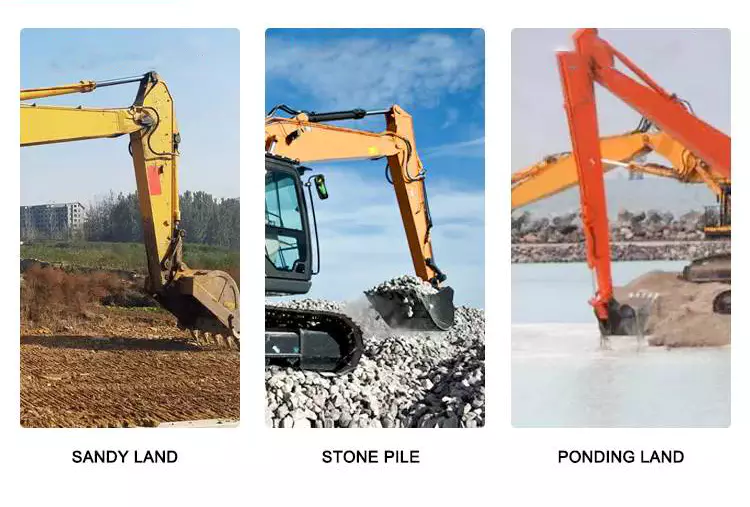
– Hydraulic cylinders are highly adaptable to various construction and mining equipment. They can be designed and manufactured in different sizes, stroke lengths, and configurations to suit specific requirements. Hydraulic cylinders can be integrated into different types of equipment, such as excavators, loaders, bulldozers, and drilling rigs. Their adaptability allows for the customization of equipment to meet the needs of different applications and operating conditions, enhancing overall performance.
4. Durability and Reliability:
– Construction and mining environments are known for their harsh conditions, including extreme temperatures, vibrations, and exposure to dust, dirt, and debris. Hydraulic cylinders are designed to withstand these challenging conditions and provide long-lasting performance. They are constructed using robust materials, such as high-strength steel, and equipped with seals and components that can endure heavy loads, impacts, and contaminants. The durability and reliability of hydraulic cylinders ensure that construction and mining equipment can operate continuously and withstand the demanding nature of these industries.
5. Safety:
– Hydraulic cylinders contribute to the safety of construction and mining equipment operations. Their precise control allows operators to perform tasks with accuracy, minimizing the risk of accidents and damage to the equipment or surrounding structures. Hydraulic cylinders also enable the implementation of safety features, such as overload protection systems and emergency stop mechanisms, ensuring the safe operation of the equipment. The reliable and controlled movements provided by hydraulic cylinders enhance overall safety in construction and mining operations.
6. Increased Productivity:
– By providing the necessary power, precise control, and adaptability, hydraulic cylinders contribute to increased productivity in construction and mining applications. Construction and mining equipment equipped with hydraulic cylinders can perform tasks more efficiently and effectively, reducing the time and effort required to complete projects. The ability to handle heavy loads, control movements precisely, and adapt to various tasks improves the overall productivity of the equipment, leading to cost savings and improved project timelines.
In summary, hydraulic cylinders enhance the performance of construction and mining equipment by providing power, precise control, adaptability, durability, and safety. They enable these machines to handle heavy loads, perform tasks with accuracy, withstand harsh conditions, and increase productivity. Hydraulic cylinders are integral components that contribute to the efficiency and effectiveness of construction and mining operations.
Contribution of Hydraulic Cylinders to the Precision of Robotic and Automation Systems
Hydraulic cylinders play a significant role in enhancing the precision of robotic and automation systems. These systems rely on precise and controlled movements to perform various tasks with accuracy and repeatability. Let’s explore how hydraulic cylinders contribute to the precision of robotic and automation systems:
- Precise Positioning: Hydraulic cylinders enable precise positioning of robotic arms or automation components. They provide accurate control over the linear motion required for tasks such as picking, placing, and assembly. By precisely controlling the extension and retraction of the hydraulic cylinder, the system can achieve the desired position with high accuracy, ensuring precise alignment and consistent results.
- Controlled Motion: Hydraulic cylinders offer controlled and smooth motion, which is crucial for precise operation in robotic and automation systems. The flow of hydraulic fluid can be precisely regulated to control the speed and acceleration of the cylinder’s movement. This precise control allows for gentle and controlled movements, minimizing vibrations, overshooting, or jerky motions that could affect the accuracy of the system.
- Force Control: Hydraulic cylinders provide force control capabilities that contribute to precision in robotic and automation systems. By adjusting the hydraulic pressure, the force exerted by the cylinder can be precisely controlled. This is particularly valuable in applications that require delicate force-sensitive tasks, such as gripping fragile objects or performing precise force feedback during assembly or testing processes.
- Load Handling: Hydraulic cylinders are capable of handling heavy loads, allowing robotic and automation systems to manipulate and transport objects with precision. The high force capabilities of hydraulic cylinders ensure secure and stable handling of loads, minimizing the risk of slippage or imprecise positioning. This is crucial in applications where precise control over heavy objects is required, such as material handling or industrial assembly processes.
- Durability and Reliability: Hydraulic cylinders are known for their durability and reliability in demanding industrial environments. The ability to withstand repeated use, high loads, and harsh conditions ensures consistent performance over time. This reliability contributes to the precision of robotic and automation systems, as any deviation or failure in the cylinder’s movement could lead to inaccuracies or disruptions in the system’s operation.
In summary, hydraulic cylinders make significant contributions to the precision of robotic and automation systems by enabling precise positioning, controlled motion, force control, load handling, and offering durability and reliability. These capabilities ensure accurate and repeatable movements, minimize errors, and enhance the overall precision of the system. By incorporating hydraulic cylinders into robotic and automation systems, manufacturers can achieve higher levels of precision, efficiency, and productivity in various industrial applications.
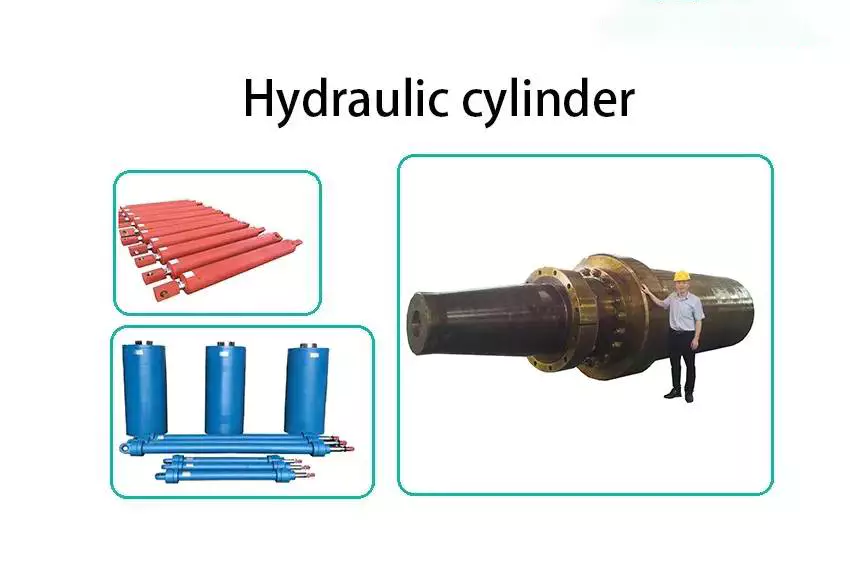
In che modo i cilindri idraulici gestiscono le variazioni di carico e pressione durante il funzionamento?
I cilindri idraulici sono progettati per gestire le variazioni di carico e pressione durante il funzionamento, rendendoli versatili ed efficienti in diverse applicazioni. I sistemi idraulici sfruttano il principio della trasmissione della forza attraverso un fluido incomprimibile per generare un movimento lineare. Ecco una spiegazione dettagliata di come i cilindri idraulici gestiscono le variazioni di carico e pressione:
1. Movimentazione del carico:
– I cilindri idraulici sono in grado di gestire carichi diversi sfruttando il principio della legge di Pascal. Secondo la legge di Pascal, quando si applica pressione a un fluido in uno spazio confinato, la pressione viene trasmessa in modo uniforme in tutte le direzioni. In un cilindro idraulico, la forza applicata al pistone si traduce in una forza in uscita uguale all'estremità dello stelo del cilindro. Le dimensioni del pistone e la pressione esercitata determinano la forza generata dal cilindro. Pertanto, i cilindri idraulici possono gestire un'ampia gamma di carichi regolando la pressione applicata al fluido.
2. Compensazione della pressione:
– I sistemi idraulici incorporano meccanismi di compensazione della pressione per gestire le variazioni di pressione durante il funzionamento. Le valvole o i regolatori di compensazione della pressione vengono spesso utilizzati per mantenere una pressione costante nel sistema idraulico, indipendentemente dalle variazioni di carico. Queste valvole regolano automaticamente la portata o la pressione per garantire un funzionamento stabile e controllato del cilindro idraulico. Compensando le variazioni di pressione, i cilindri idraulici possono mantenere una forza di uscita costante e prevenire danni o instabilità dovuti a una pressione eccessiva.
3. Valvole di controllo:
– Le valvole di controllo svolgono un ruolo cruciale nella gestione delle variazioni di pressione e carico durante il funzionamento del cilindro idraulico. Le valvole di controllo direzionale, come le valvole a spola o le valvole a fungo, controllano il flusso del fluido idraulico in entrata e in uscita dal cilindro, consentendo un controllo preciso dell'estensione e della retrazione del cilindro. Regolando la posizione della valvola di controllo, la velocità e la forza esercitate dal cilindro idraulico possono essere regolate in base ai requisiti di carico e pressione dell'applicazione. Le valvole di controllo consentono una gestione efficiente delle variazioni di carico e pressione fornendo un controllo preciso del sistema idraulico.
4. Accumulatori:
– Gli accumulatori idraulici sono spesso utilizzati per gestire le fluttuazioni di pressione e carico. Gli accumulatori immagazzinano fluido idraulico sotto pressione, che può essere rilasciato o assorbito secondo necessità per compensare improvvise variazioni di carico o pressione. Quando il carico sul cilindro idraulico diminuisce, l'accumulatore rilascia il fluido immagazzinato per mantenere la pressione e prevenire picchi di pressione. Viceversa, quando il carico sul cilindro aumenta, l'accumulatore assorbe il fluido in eccesso per mantenere la stabilità del sistema. Utilizzando gli accumulatori, i cilindri idraulici possono gestire efficacemente le variazioni di carico e pressione, garantendo un funzionamento regolare e controllato.
5. Sistemi di feedback e controllo:
– I sistemi idraulici avanzati possono integrare sistemi di feedback e controllo per monitorare e regolare il funzionamento dei cilindri idraulici in tempo reale. Sensori di posizione o sensori di pressione forniscono un feedback sulla posizione, la forza e la pressione del cilindro, consentendo al sistema di controllo di apportare continue regolazioni per ottimizzare le prestazioni. Questi sistemi possono adattarsi automaticamente alle variazioni di carico e pressione, garantendo un controllo preciso e un funzionamento efficiente del cilindro idraulico.
6. Considerazioni progettuali:
– Considerazioni progettuali appropriate, come la scelta della dimensione del cilindro, del diametro del pistone e del diametro dello stelo appropriati, sono essenziali per gestire le variazioni di carico e pressione. La progettazione deve tenere conto delle condizioni di carico e pressione massime previste per garantire che il cilindro idraulico funzioni entro il range specificato. Inoltre, la selezione di guarnizioni, materiali e componenti adeguati in grado di resistere alle variazioni di carico e pressione previste è fondamentale per mantenere l'affidabilità e la longevità del cilindro idraulico.
Sfruttando i principi dei sistemi idraulici, integrando meccanismi di compensazione della pressione, impiegando valvole di controllo e accumulatori e implementando sistemi di feedback e controllo, i cilindri idraulici possono gestire efficacemente le variazioni di carico e pressione durante il funzionamento. Queste caratteristiche e considerazioni progettuali consentono ai cilindri idraulici di adattarsi e funzionare in modo ottimale in un'ampia gamma di applicazioni e condizioni operative.


editor by CX 2023-10-14