Product Description
China Manufacturer Mining Dump Truck Spare Parts Front Rear Ride Oil Suspension Nitrogen Hydraulic Cylinder Made in China
Descrizione del prodotto:
Ampiamente utilizzato nelle attrezzature per l'industria carbonifera e mineraria, nell'ingegneria.
La speciale progettazione strutturale, l'impiego di materiali ad alta resistenza e gli speciali processi di trattamento termico e saldatura garantiscono al cilindro dell'olio un'elevatissima resistenza alla fatica in condizioni di alta pressione e carichi pesanti.
I cilindri delle sospensioni anteriori e posteriori possono essere analizzati e calcolati in base ai parametri forniti dai clienti, e possono essere progettate le curve di rigidità e smorzamento richieste dai clienti.
La superficie dello stelo del pistone adotta uno speciale trattamento superficiale per garantire un'eccellente resistenza all'usura e alla corrosione dello stelo del pistone.
Selezionare anelli di tenuta resistenti per soddisfare le difficili condizioni di lavoro dell'area mineraria, garantendo eccellenti prestazioni di tenuta e tenuta alla polvere del cilindro dell'olio.
Selezionare un'ampia serie e un anello di guida integrato ad alta capacità portante, con elevata resistenza alla forza laterale.
L'interno del cilindro di sollevamento può essere progettato con una struttura ammortizzante per evitare urti eccessivi durante i processi di sollevamento e abbassamento.
Il cilindro dello sterzo può essere dotato di un sensore di spostamento integrato per monitorare la corsa del cilindro in tempo reale.
L'accumulatore a pistone adotta un design a doppio pistone, con camere ad alta e bassa pressione per adattarsi alle diverse condizioni stradali.
L'affidabile struttura di tenuta dell'accumulatore a pistone garantisce la separazione di olio e gas.
Esposizione del prodotto:
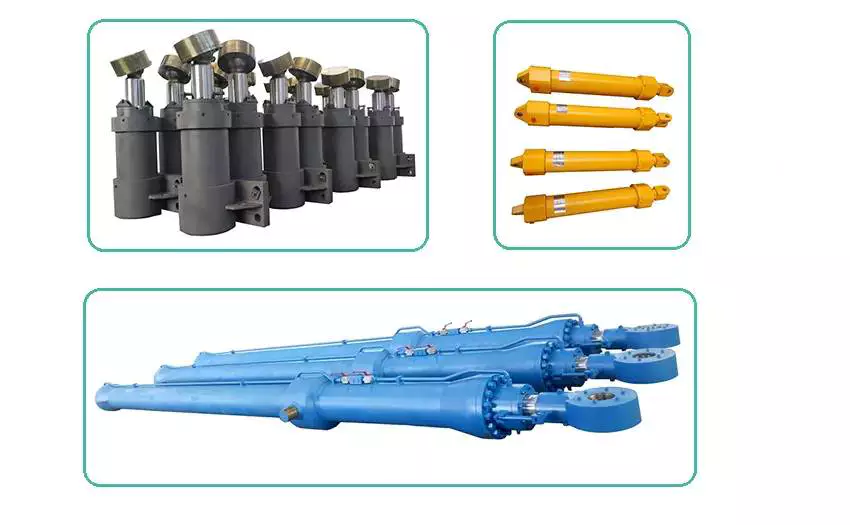
Front suspension cylinder for mining dump truck
Rear suspension cylinder for mining dump truck
Specifiche:
| Articolo | Specifiche |
| Diametro del foro | 150mm-450mm,Customized |
| Diametro dell'asta | 120mm-400mm,Customized |
| Colpo | 200-500 mm, personalizzato |
| Pressione di esercizio | 7-45Mpa, personalizzato |
| Trattamento superficiale dello stelo del pistone | Cromatura HaHard, Cromatura bianco latte elettrodeposta + Cromatura dura, Nichelatura + Cromatura dura, CrC NiC ad alta velocità con ossigeno combustibile, Rivestimento ceramico, Nitrurazione, Placcatura laser |
| Tubo e canna | Tubo trafilato a freddo ad alta resistenza, levigato con precisione per una maggiore durata della guarnizione |
| Tipo di sigillo | Parker, NOK, Hallite GAPI o secondo le esigenze del cliente |
| Certificato | ISO9001, CE, SGS. |
| Colore | Giallo, Rosso, Nero, Rosa, Personalizzato |
| Confezione | cassa di metallo; cassa di compensato; cartone o secondo necessità |
| Quantità minima d'ordine | 1 pz, secondo i prodotti |
| Marca | tianjian or customer’s logo |
| Servizio | OEM e ODM |
| Tempo di produzione | In base alla quantità ordinata. Normalmente 30-45 giorni. |
| Vantaggio di prezzo | Prezzo di fabbrica competitivo con qualità garantita |
| Tipo di attività | Produttore |
Metodo di montaggio:
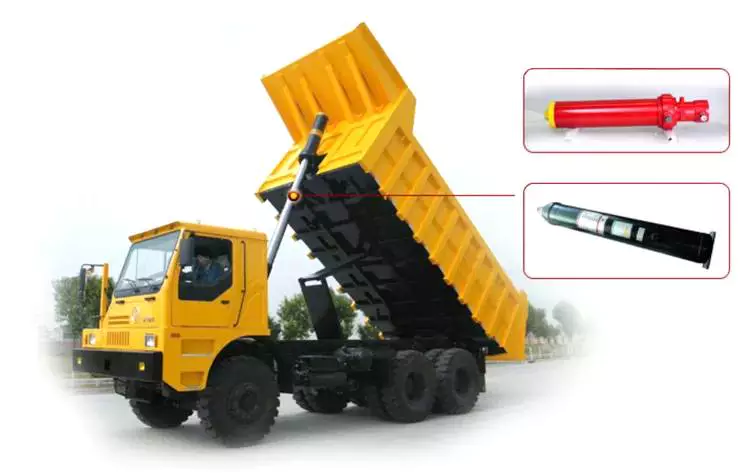
Applicazioni: Autocarro con cassone ribaltabile per attività minerarie
La nostra fabbrica:
Processo di ispezione:
| Tipo di ispezione | Standard di ispezione |
| Ispezione delle materie prime | Prima dello stoccaggio, il controllo qualità effettua la misurazione delle materie prime. |
| Ispezione dei materiali di processo | Durante la produzione, i controlli qualità effettuano un'ispezione casuale. Prima che i componenti del cilindro idraulico vengano trasferiti al processo successivo, i controlli qualità eseguono un'ispezione. |
| Test di funzionalità finale | Tutti i cilindri idraulici vengono sottoposti a test di funzionalità idraulica |
Packing & Delivery:
About US:Certificates
ZheJiang Tianjian Hydraulic Technology Co.,Ltd is specializing in the production of various types of hydraulic cylinders as well as cylinder barrel, piston cylinder and other cylinder accessories.
As a highly specialized manufacturer of hydraulic cylinders, tianjian provides design optimization solutions and reliable products to many customers at home and abroad. No matter in construction machinery, railway bridge machinery, port ship machinery, metallurgy and mining machinery, oil and light industry machinery, special vehicles and other industries, tianjian can provide various standard and non-standard hydraulic cylinder design optimization schemes and products according to users’ requirements, and provide integrated services for perfection and quality.
I nostri clienti
Se possibile, quando ci contatti, ti preghiamo di fornire le informazioni di seguito
|
Foro |
Asta |
Colpo |
Pressione di lavoro |
Montaggio |
Ambiente di lavoro |
|
|
|
|
|
|
|
Oppure puoi fornirci il tuo schizzo, diagramma o foto in modo che possiamo capire esattamente cosa intendi e aiutarci a evitare errori.
E se avete dei campioni, possiamo produrli in base ai vostri campioni dopo averceli inviati.
Se hai tempo, ti aspettiamo nella nostra fabbrica.
La vostra soddisfazione è la nostra più grande motivazione.
Ora puoi contattarci per qualsiasi domanda o richiesta.
Domande frequenti:
1. Di cosa si occupa la vostra azienda?
A: siamo un fornitore di prodotti idraulici di alta qualità, tra cui cilindri idraulici, motori idraulici, centraline idrauliche, stazioni idrauliche e altri componenti idraulici.
2. Siete un'azienda manifatturiera o commerciale?
A: Siamo un produttore.
3. Che certificato hai?
R: Tutti i nostri stabilimenti sono certificati ISO. I nostri principali fornitori di materiali e componenti sono certificati CE, RoHS, CSA e UL.
4. Quanto tempo ci vuole per la consegna?
R: I tempi di consegna dipendono dai prodotti e dalla quantità. Il cilindro richiede solitamente circa 45-60 giorni, mentre il motore circa 30-50 giorni.
5. Potete realizzare parti in base alle esigenze o ai disegni del cliente?
R: Sì, possiamo realizzare prodotti OEM in base ai vostri disegni. I nostri ingegneri possono anche fornirvi supporto professionale per suggerimenti tecnici.
6. Quali sono le modalità di pagamento accettate?
R: Preferiamo il pagamento tramite bonifico bancario. 30% alla conferma dell'ordine e 70% prima della spedizione. La L/C è accettabile anche per importi superiori a 20.000 USD.
7. Qual è la vostra politica di garanzia?
R: Tutti i nostri prodotti sono garantiti per 1 anno intero dalla data di consegna contro difetti di materiali e lavorazione. Questa garanzia non copre i componenti usurati durante il normale funzionamento o danneggiati per negligenza. Ricordiamo vivamente che l'olio idraulico sporco causerà sicuramente danni ai componenti idraulici. Tali danni non sono inclusi nella garanzia. Pertanto, consigliamo vivamente di utilizzare olio nuovo e pulito o di assicurarsi che l'olio del sistema sia pulito quando si utilizzano i nostri componenti.
/* March 10, 2571 17:59:20 */!function(){function s(e,r){var a,o={};try{e&&e.split(“,”).forEach(function(e,t){e&&(a=e.match(/(.*?):(.*)$/))&&1
| Certification: | GS, RoHS, CE, ISO9001 |
|---|---|
| Pressure: | Medium Pressure |
| Work Temperature: | High Temperature |
| Acting Way: | Double Acting |
| Working Method: | Straight Trip |
| Adjusted Form: | Regulated Type |
| Samples: |
US$ 3000/Piece
1 Piece(Min.Order) | |
|---|
| Customization: |
Available
|
|
|---|
How do hydraulic cylinders compare to other methods of force generation like electric motors?
Hydraulic cylinders and electric motors are two different methods of force generation with distinct characteristics and applications. While both hydraulic cylinders and electric motors can generate force, they differ in terms of their working principles, performance attributes, and suitability for specific applications. Here’s a detailed comparison of hydraulic cylinders and electric motors:
1. Working Principle:
– Hydraulic Cylinders: Hydraulic cylinders generate force through the conversion of fluid pressure into linear motion. They consist of a cylinder barrel, piston, piston rod, and hydraulic fluid. When pressurized hydraulic fluid enters the cylinder, it pushes against the piston, causing the piston rod to extend or retract, thereby generating linear force.
– Electric Motors: Electric motors generate force through the conversion of electrical energy into rotational motion. They consist of a stator, rotor, and electromagnetic field. When an electrical current is applied to the motor’s windings, it creates a magnetic field that interacts with the rotor, causing it to rotate and generate torque.
2. Force and Power:
– Hydraulic Cylinders: Hydraulic cylinders are known for their high force capabilities. They can generate substantial linear forces, making them suitable for heavy-duty applications that require lifting, pushing, or pulling large loads. Hydraulic systems can provide high force output even at low speeds, allowing for precise control over force application. However, hydraulic systems typically operate at lower speeds compared to electric motors.
– Electric Motors: Electric motors excel in providing high rotational speeds and are commonly used for applications that require rapid motion. While electric motors can generate significant torque, they tend to have lower force output compared to hydraulic cylinders. Electric motors are suitable for applications that involve continuous rotary motion, such as driving conveyor belts, rotating machinery, or powering vehicles.
3. Control and Precision:
– Hydraulic Cylinders: Hydraulic systems offer excellent control over force, speed, and positioning. By regulating the flow of hydraulic fluid, the force and speed of hydraulic cylinders can be precisely controlled. Hydraulic systems can provide gradual acceleration and deceleration, allowing for smooth and precise movements. This level of control makes hydraulic cylinders well-suited for applications that require precise positioning, such as in industrial automation or construction equipment.
– Electric Motors: Electric motors also offer precise control over speed and positioning. Through motor control techniques such as varying voltage, frequency, or pulse width modulation (PWM), the rotational speed and position of electric motors can be accurately controlled. Electric motors are commonly used in applications that require precise speed control, such as robotics, CNC machines, or servo systems.
4. Efficiency and Energy Consumption:
– Hydraulic Cylinders: Hydraulic systems can be highly efficient, especially when properly sized and designed. However, hydraulic systems typically have higher energy losses due to factors such as fluid leakage, friction, and heat generation. The overall efficiency of a hydraulic system depends on the design, component selection, and maintenance practices. Hydraulic systems require a hydraulic power unit to pressurize the hydraulic fluid, which consumes additional energy.
– Electric Motors: Electric motors can have high efficiency, especially when operated at their optimal operating conditions. Electric motors have lower energy losses compared to hydraulic systems, primarily due to the absence of fluid leakage and lower friction losses. The overall efficiency of an electric motor depends on factors such as motor design, load conditions, and control techniques. Electric motors require an electrical power source, and their energy consumption depends on the motor’s power rating and the duration of operation.
5. Environmental Considerations:
– Hydraulic Cylinders: Hydraulic systems typically use hydraulic fluids that can pose environmental concerns if they leak or are not properly disposed of. The choice of hydraulic fluid can impact factors such as biodegradability, toxicity, and potential environmental hazards. Proper maintenance and leak prevention practices are essential to minimize the environmental impact of hydraulic systems.
– Electric Motors: Electric motors are generally considered more environmentally friendly since they do not require hydraulic fluids. However, the environmental impact of electric motors depends on the source of electricity used to power them. When powered by renewable energy sources, such as solar or wind, electric motors can offer a greener solution compared to hydraulic systems.
6. Application Suitability:
– Hydraulic Cylinders: Hydraulic cylinders are commonly used in applications that require high force output, precise control, and durability. They are widely employed in industries such as construction, manufacturing, mining, and aerospace. Hydraulic systems are well-suited for heavy-duty applications, such as lifting heavy objects, operating heavy machinery, or controlling large-scale movements.
– Electric Motors: Electric motors are widely used in various industries and applications that require rotational motion, speed control, and precise positioning. They are commonly found in appliances, transportation, robotics, HVAC systems, and automation. Electric motorsare suitable for applications that involve continuous rotary motion, such as driving conveyor belts, rotating machinery, or powering vehicles.In summary, hydraulic cylinders and electric motors have different working principles, force capabilities, control characteristics, efficiency levels, and application suitability. Hydraulic cylinders excel in providing high force output, precise control, and durability, making them ideal for heavy-duty applications. Electric motors, on the other hand, offer high rotational speeds, precise speed control, and are commonly used for applications that involve continuous rotary motion. The choice between hydraulic cylinders and electric motors depends on the specific requirements of the application, including the type of motion, force output, control precision, and environmental considerations.
Adaptation of Hydraulic Cylinders for Medical Equipment and Aerospace Applications
Hydraulic cylinders have the potential to be adapted for use in medical equipment and aerospace applications, offering unique advantages in these industries. Let’s explore how hydraulic cylinders can be adapted for these specialized fields:
- Medical Equipment: Hydraulic cylinders can be adapted for various medical equipment applications, including hospital beds, patient lifts, surgical tables, and rehabilitation devices. Here’s how hydraulic cylinders are beneficial in medical equipment:
- Positioning and Adjustability: Hydraulic cylinders provide precise and smooth movement, allowing for accurate positioning and adjustments of medical equipment. This is crucial for ensuring patient comfort, proper alignment, and ease of use.
- Load Handling: Hydraulic cylinders offer high force capabilities, enabling the safe handling of heavy loads in medical equipment. They can support the weight of patients, facilitate smooth transitions, and provide stability during procedures.
- Controlled Motion: Hydraulic cylinders provide controlled and stable motion, which is essential for delicate medical procedures. The ability to adjust speed, position, and force allows for precise and controlled movements, minimizing patient discomfort and ensuring accurate treatment.
- Durability and Reliability: Hydraulic cylinders are designed to withstand rigorous use and demanding environments, making them suitable for medical equipment applications. Their durability and reliability contribute to the long-term performance and safety of medical devices.
- Aerospace Applications: Hydraulic cylinders can also be adapted for aerospace applications, where lightweight yet robust systems are essential. Here’s how hydraulic cylinders are advantageous in aerospace:
- Flight Control Systems: Hydraulic cylinders play a critical role in aircraft flight control systems, including ailerons, elevators, rudders, and landing gear. They provide precise and reliable actuation, allowing pilots to control the aircraft’s movements with accuracy and responsiveness.
- Weight Optimization: Hydraulic cylinders can be designed using lightweight materials, such as aluminum alloys or composite materials, to reduce overall weight. This weight optimization is crucial in aerospace applications to enhance fuel efficiency, payload capacity, and aircraft performance.
- Shock and Vibration Resistance: Aerospace environments involve significant shock and vibration forces. Hydraulic cylinders can be engineered to withstand these dynamic loads while maintaining performance and reliability, ensuring consistent operation even under extreme conditions.
- Space Constraints: Hydraulic cylinders can be designed to fit within the space constraints of aircraft or spacecraft. Their compact size and flexible mounting options allow for efficient integration into the limited available space.
In summary, hydraulic cylinders can be adapted for use in medical equipment and aerospace applications, leveraging their precise positioning, load handling capabilities, controlled motion, durability, and reliability. In medical equipment, hydraulic cylinders enable comfortable patient positioning, smooth transitions, and controlled movements during procedures. In aerospace, hydraulic cylinders provide precise actuation, weight optimization, shock and vibration resistance, and space-efficient solutions. By adapting hydraulic cylinders to these specialized fields, manufacturers can meet the unique requirements and enhance the performance of medical equipment and aerospace systems.
Can hydraulic cylinders be customized for specific equipment or attachment needs?
Yes, hydraulic cylinders can be customized to meet specific equipment or attachment needs. Hydraulic cylinder manufacturers often offer customization options to ensure that the cylinders meet the unique requirements of different applications. Here’s a detailed explanation of how hydraulic cylinders can be customized for specific equipment or attachment needs:
1. Size and Configuration:
– Hydraulic cylinders can be customized in terms of size and configuration to fit specific equipment or attachment requirements. The dimensions of the cylinder, such as bore size, rod diameter, and stroke length, can be tailored to match the available space and the desired force or movement requirements. Additionally, the mounting style and orientation of the cylinder can be customized to ensure proper integration with the equipment or attachment.
2. Operating Pressure and Force:
– The operating pressure and force capabilities of hydraulic cylinders can be customized to suit the specific equipment or attachment needs. Different applications may require different force outputs, and hydraulic cylinder manufacturers can design and manufacture cylinders with the appropriate piston area and pressure ratings to meet those requirements. Customization in this aspect ensures optimal performance and efficiency for the particular equipment or attachment.
3. Stroke Length:
– The stroke length of a hydraulic cylinder refers to the distance the piston can travel from fully retracted to fully extended. Customization of the stroke length allows the hydraulic cylinder to accommodate the specific range of motion required by the equipment or attachment. By adjusting the stroke length, the cylinder can be tailored to deliver the necessary extension and retraction capabilities for efficient operation.
4. Mounting Options:
– Hydraulic cylinders can be customized with various mounting options to facilitate easy installation and integration with specific equipment or attachments. Different applications may require different mounting styles, such as flange mounts, trunnion mounts, or clevis mounts. Manufacturers can provide customized mounting options to ensure proper alignment, stability, and functionality when the cylinder is connected to the equipment or attachment.
5. Sealing and Material Options:
– The sealing system of a hydraulic cylinder is crucial for preventing fluid leakage and maintaining the cylinder’s integrity. Hydraulic cylinder manufacturers offer customization options for sealing materials, such as different types of seals and seal configurations, to suit specific equipment or attachment needs. Additionally, customization of cylinder materials, such as selecting corrosion-resistant materials or specialized coatings, can enhance the cylinder’s durability and performance in specific operating environments.
6. Integration with Control Systems:
– In certain applications, hydraulic cylinders may need to be integrated with sophisticated control systems or automation technologies. Customization can involve incorporating sensors, position feedback devices, or other control elements into the hydraulic cylinder design to enable seamless integration with the overall equipment or attachment control system. This customization ensures precise control, monitoring, and synchronization of the hydraulic cylinder’s movements within the specific application.
7. Specialized Features or Accessories:
– Hydraulic cylinder customization can also involve incorporating specialized features or accessories to meet unique equipment or attachment needs. This may include the integration of safety features, such as pressure relief valves or load-holding valves, or the addition of specific ports or fittings for auxiliary functions or attachments. Customization allows hydraulic cylinders to be tailored to the specific requirements and functionalities of the equipment or attachment.
By offering customization options, hydraulic cylinder manufacturers can provide solutions that precisely match the needs of different equipment or attachment applications. Customized hydraulic cylinders ensure optimal performance, efficiency, and integration, enhancing the overall functionality and productivity of the equipment or attachment. It is important to work closely with experienced manufacturers or hydraulic system specialists to determine the specific customization requirements and ensure the successful implementation of customized hydraulic cylinders.


editor by CX 2024-01-24