Product Description
Double Action Hydraulic Cylinder for Hydraulic Scissors
Product Технические характеристики:
| Элемент | Технические характеристики |
| Bore diameter | 280mm,customizable |
| Bod diameter | 190mm,customizable |
| Гладить | 300mm,customizable |
| Рабочее давление | 35Mpa,customizable |
| Обработка поверхности штока поршня | Твёрдое хромирование, гальваническое молочно-белое хромирование + твёрдое хромирование, никелирование + твёрдое хромирование, высокоскоростная кислородно-топливная сварка CrC NiC, керамическое покрытие, азотирование, лазерная наплавка |
| Рабочее давление | Maximum 38MPa,Customizable |
| Материал | Высокопрочная холоднотянутая труба, прецизионная хонинговка для продления срока службы уплотнения |
| Монтаж | Earring,Flange,Clevis.Foot,Trunnion,Customizable |
| Тип уплотнения | Parker, NOK, Hallite GAPI или по требованию заказчика |
| Warrenty | 18 months |
| минимальный объем заказа | 1pcs |
| Время производства | Based on order quantity.normally 30-40 days. |
| Certification | ISO9001,CE, SGS |
| Цвет | Red,White,Pink,Yellow,Bule,etc,Customizable |
| Упаковка | Metal case,plywood case,carton or as requirement |
| Услуга | OEM и ODM-производители |
| Ценовое преимущество | Конкурентоспособная заводская цена с гарантированным качеством |
| Тип бизнеса | Производитель |
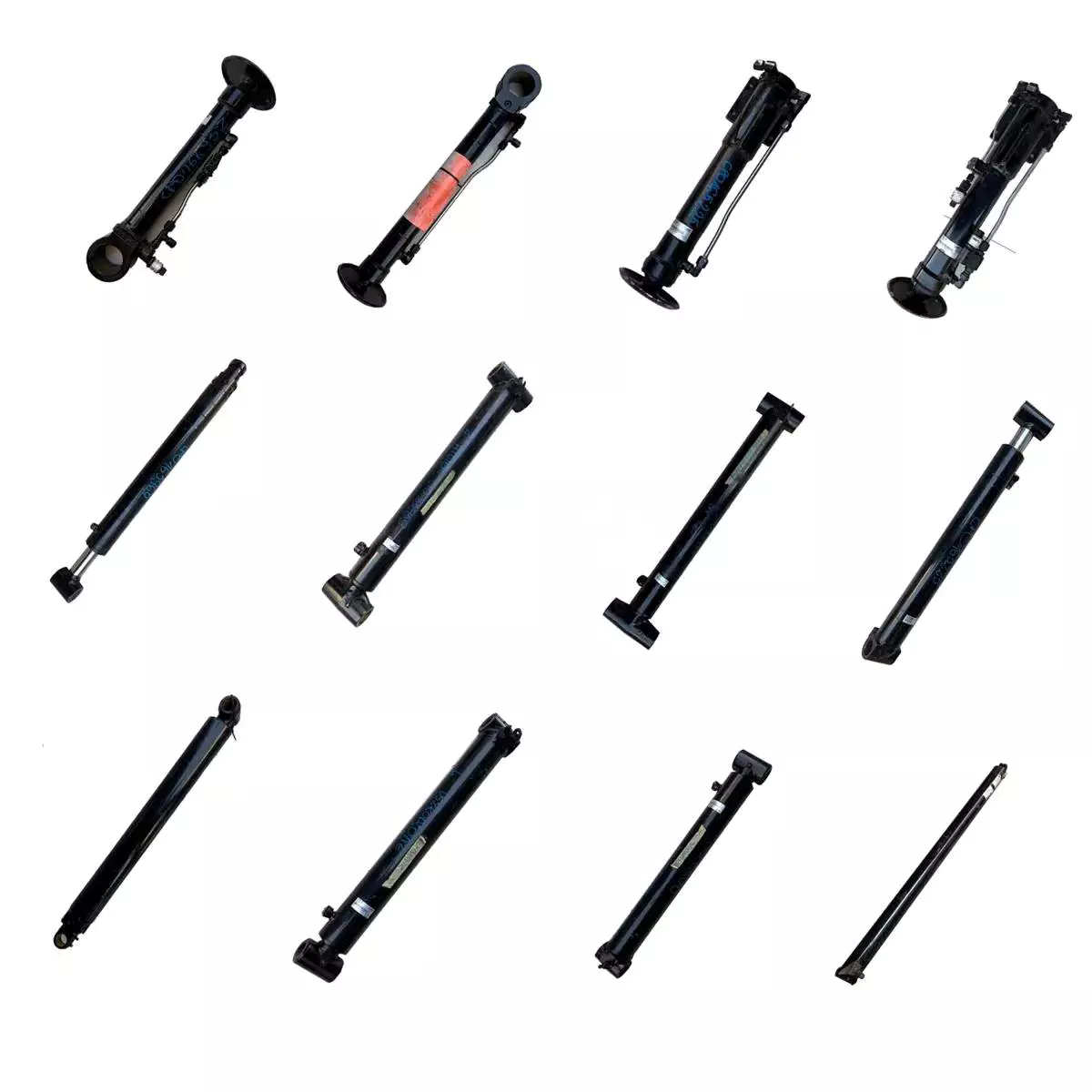
Дисплей продукта:
Product Advantages:
Специальная конструкция конструкции, использование высокопрочных материалов, а также особые процессы термообработки и сварки гарантируют масляному цилиндру чрезвычайно высокую усталостную прочность при высоком давлении и больших нагрузках.
Цилиндры передней и задней подвески могут быть проанализированы и рассчитаны на основе параметров, предоставленных клиентами, а также могут быть разработаны требуемые клиентами кривые жесткости и демпфирования.
Поверхность штока поршня подвергается специальной обработке, что обеспечивает отличную износостойкость и коррозионную стойкость штока.
Выбирайте сверхпрочные уплотнительные кольца, которые соответствуют суровым условиям работы в горнодобывающей зоне и гарантируют отличную пыленепроницаемость и герметичность масляного цилиндра.
Выберите широкую серию и интегрированное направляющее кольцо с высокой несущей способностью, обладающее высокой устойчивостью к боковым силам.
Внутренняя часть подъемного цилиндра может быть спроектирована с буферной конструкцией, чтобы избежать чрезмерных ударов во время процессов подъема и опускания.
Цилиндр рулевого управления может быть оснащен встроенным датчиком перемещения для контроля хода цилиндра в режиме реального времени.
Поршневой аккумулятор имеет двухпоршневую конструкцию с камерами высокого и низкого давления для соответствия различным дорожным условиям.
Надежная конструкция уплотнений поршневого аккумулятора обеспечивает разделение масла и газа.
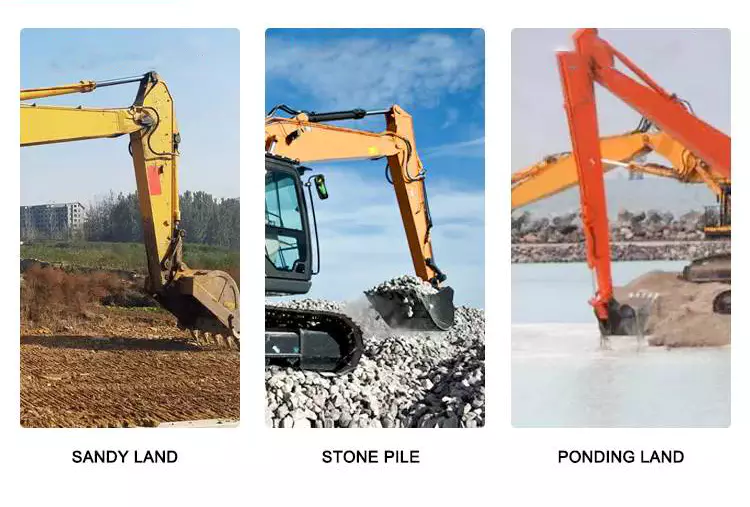
Appliactions:Construction Machinery,Hydraulic Scissors.
Способ крепления:
Наш завод:
Процесс проверки:
| Тип инспекции | Стандарт инспекции |
| Инспекция сырья | Перед закладкой на хранение отдел контроля качества проводит замеры сырья. |
| Проверка технологических материалов | В процессе производства специалисты по контролю качества проводят выборочные проверки. Перед тем, как детали гидроцилиндра передаются на следующий этап обработки, ОТК проводит проверку. |
| Финальное функциональное тестирование | Все гидравлические цилиндры проходят гидравлические функциональные испытания. |
Inspection of Mechanical Properties of Raw Materials
Process Inspection
Final Testing
Packing & Delivery:
About US:
Our Certificate
ZheJiang Tianjian Hydraulic Technology Co.,Ltd is specializing in the production of various types of hydraulic cylinders as well as cylinder barrel, piston cylinder and other cylinder accessories.
As a highly specialized manufacturer of hydraulic cylinders, tianjian provides design optimization solutions and reliable products to many customers at home and abroad. No matter in construction machinery, railway bridge machinery, port ship machinery, metallurgy and mining machinery, oil and light industry machinery, special vehicles and other industries, tianjian can provide various standard and non-standard hydraulic cylinder design optimization schemes and products according to users’ requirements, and provide integrated services for perfection and quality.
Если возможно, при обращении к нам, пожалуйста, укажите информацию, указанную ниже.
|
Отверстие |
Стержень |
Гладить |
Рабочее давление |
Монтаж |
Рабочая среда |
|
|
|
|
|
|
|
Или вы можете предоставить нам свой эскиз, схему или фотографии, чтобы мы могли точно понять, что вы имели в виду, и это поможет нам избежать ошибок.
А если у вас есть образцы, мы можем изготовить по ним продукцию после отправки нам.
Если у вас есть время, добро пожаловать на нашу фабрику.
Ваше удовлетворение — наша главная мотивация.
Our Main Customers
Теперь вы можете связаться с нами по любому вопросу или запросу.
ЧАСТО ЗАДАВАЕМЫЕ ВОПРОСЫ:
1. Чем занимается ваша компания?
A: Мы являемся поставщиком высококачественной гидравлической продукции, включая гидравлические цилиндры, гидравлические двигатели, гидравлические блоки питания, гидравлические станции и другие гидравлические компоненты.
2. Вы производственная или торговая компания?
О: Мы являемся производителем.
3. Какой у вас сертификат?
О: Все наши заводы сертифицированы по стандарту ISO. Наши основные поставщики материалов и комплектующих имеют сертификаты CE, RoHS, CSA и UL.
4. Каковы сроки доставки?
A: The delivery time depends on different products and quantity. The cylinder usually need about 45-60 days and the Motor need about 30-50 days.
5. Можете ли вы изготовить детали по требованию или чертежу заказчика?
A: Да, мы можем изготовить OEM-продукцию по вашим чертежам. Наши инженеры также готовы оказать вам профессиональную поддержку и предоставить технические рекомендации.
6. Какие условия оплаты вы принимаете?
A: Мы предпочитаем оплату телеграфным переводом через банк. 30% при подтверждении заказа и 70% перед отправкой. Аккредитив также принимается для сумм свыше 20 000 долларов США.
7. Какова ваша гарантийная политика?
A: All our products are warranted for 1 full year from date of delivery against defects in materials and workmanship. This warranty does not cover parts that are worn out through the course of normal operation or are damaged through negligence. We serious remind that unclean hydraulic oil will definitely cause damage to your Hydraulic components. And this damage is not included in the warranty range. So we strongly suggest you to use new clean oil or make sure the system oil are clean when using our parts
/* May 10, 2571 16:49:51 */!function(){function d(e,r){var a,o={};try{e&&e.split(“,”).forEach(function(e,t){e&&(a=e.match(/(.*?):(.*)$/))&&1
How do hydraulic cylinders handle the challenges of precise positioning and control?
Hydraulic cylinders are designed to handle the challenges of precise positioning and control with a combination of engineering principles and advanced control systems. These challenges often arise in applications where accurate and controlled movements are required, such as in industrial automation, construction, and material handling. Here’s a detailed explanation of how hydraulic cylinders overcome these challenges:
1. Fluid Power Control:
– Hydraulic cylinders utilize fluid power control to achieve precise positioning and control. The hydraulic system consists of a hydraulic pump, control valves, and hydraulic fluid. By regulating the flow of hydraulic fluid into and out of the cylinder, operators can control the speed, direction, and force exerted by the cylinder. The fluid power control allows for smooth and accurate movements, enabling precise positioning of the hydraulic cylinder and the attached load.
2. Control Valves:
– Control valves play a crucial role in handling the challenges of precise positioning and control. These valves are responsible for directing the flow of hydraulic fluid within the system. They can be manually operated or electronically controlled. Control valves allow operators to adjust the flow rate of the hydraulic fluid, controlling the speed of the cylinder’s movement. By modulating the flow, operators can achieve fine control over the positioning of the hydraulic cylinder, enabling precise and accurate movements.
3. Proportional Control:
– Hydraulic cylinders can be equipped with proportional control systems, which offer enhanced precision in positioning and control. Proportional control systems utilize electronic feedback and control algorithms to precisely regulate the flow and pressure of the hydraulic fluid. These systems provide accurate and proportional control over the movement of the hydraulic cylinder, allowing for precise positioning at various points along its stroke length. Proportional control enhances the cylinder’s ability to handle complex tasks that require precise movements and control.
4. Position Feedback Sensors:
– To achieve precise positioning, hydraulic cylinders often incorporate position feedback sensors. These sensors provide real-time information about the position of the cylinder’s piston rod. Common types of position feedback sensors include potentiometers, linear variable differential transformers (LVDTs), and magnetostrictive sensors. By continuously monitoring the position, the feedback sensors enable closed-loop control, allowing for accurate positioning and control of the hydraulic cylinder. The feedback information is used to adjust the flow of hydraulic fluid to achieve the desired position accurately.
5. Servo Control Systems:
– Advanced hydraulic systems employ servo control systems to handle the challenges of precise positioning and control. Servo control systems combine electronic control, position feedback sensors, and proportional control valves to achieve high levels of accuracy and responsiveness. The servo control system continuously compares the desired position with the actual position of the hydraulic cylinder and adjusts the flow of hydraulic fluid to minimize any positional error. This closed-loop control mechanism enables the hydraulic cylinder to maintain precise positioning and control, even under varying loads or external disturbances.
6. Integrated Automation:
– Hydraulic cylinders can be integrated into automated systems to achieve precise positioning and control. In such setups, the hydraulic cylinders are controlled by programmable logic controllers (PLCs) or other automation controllers. These controllers receive input signals from various sensors and use pre-programmed logic to command the hydraulic cylinder’s movements. The integration of hydraulic cylinders into automated systems allows for precise and repeatable positioning and control, enabling complex sequences of movements to be executed with high accuracy.
7. Advanced Control Algorithms:
– Advancements in control algorithms have also contributed to the precise positioning and control of hydraulic cylinders. These algorithms, such as PID (Proportional-Integral-Derivative) control, adaptive control, and model-based control, enable sophisticated control strategies to be implemented. These algorithms consider factors such as load variations, system dynamics, and environmental conditions to optimize the control of hydraulic cylinders. By employing advanced control algorithms, hydraulic cylinders can compensate for disturbances and achieve precise positioning and control over a wide range of operating conditions.
In summary, hydraulic cylinders overcome the challenges of precise positioning and control through the use of fluid power control, control valves, proportional control, position feedback sensors, servo control systems, integrated automation, and advanced control algorithms. By combining these elements, hydraulic cylinders can achieve accurate and controlled movements, enabling precise positioning and control in various applications. These capabilities are essential for industries that require high precision and repeatability in their operations, such as industrial automation, robotics, and material handling.
Ensuring Controlled and Safe Force Application in Heavy Machinery with Hydraulic Cylinders
Hydraulic cylinders play a critical role in heavy machinery by ensuring controlled and safe force application. The ability to exert and control high forces is essential for heavy machinery operations, such as lifting, pressing, pushing, or pulling heavy loads. Let’s explore how hydraulic cylinders ensure controlled and safe force application in heavy machinery:
- Force Control: Hydraulic cylinders provide precise force control capabilities. The hydraulic system’s pressure can be adjusted to regulate the force exerted by the cylinder. This control allows operators to apply the necessary force for a specific task while ensuring it remains within safe limits. By accurately controlling the force, hydraulic cylinders help prevent excessive force that could damage the machinery or compromise the safety of the operation.
- Load Balancing: In heavy machinery, multiple hydraulic cylinders are often used in conjunction to distribute and balance the applied force. By using multiple cylinders, the load can be evenly distributed across the machinery, minimizing stress concentrations and ensuring controlled force application. This load balancing approach enhances the stability and safety of the machinery, preventing uneven loading that could lead to structural issues or instability.
- Safety Valves: Hydraulic systems in heavy machinery are equipped with safety valves to protect against excessive force or overloading. Safety valves are designed to release hydraulic fluid from the cylinder when the force exceeds a predetermined threshold. This prevents the force from reaching dangerous levels, safeguarding the machinery and preventing potential accidents or damage. Safety valves provide an additional layer of safety and ensure controlled force application even in unexpected circumstances.
- Pressure Relief Systems: Hydraulic cylinders incorporate pressure relief systems to further enhance safety. These systems are designed to relieve excess pressure in the hydraulic system, which could occur due to factors such as thermal expansion or system malfunctions. By relieving excess pressure, the pressure relief systems prevent sudden and uncontrolled force surges, maintaining safe and controlled force application in heavy machinery.
- Structural Integrity: Hydraulic cylinders are designed to withstand the high forces and loads associated with heavy machinery applications. The cylinders are constructed using robust materials, such as high-strength steel, and undergo rigorous testing to ensure their structural integrity. This ensures that the cylinders can safely handle the forces applied during heavy machinery operations without experiencing failures or deformations that could compromise the safety and controlled force application.
In summary, hydraulic cylinders ensure controlled and safe force application in heavy machinery through force control, load balancing, safety valves, pressure relief systems, and robust structural design. These features and design considerations enable operators to exert the necessary force while maintaining safety and preventing excessive loads or force surges. By incorporating hydraulic cylinders into heavy machinery, manufacturers can achieve controlled force application, enhance operational safety, and protect the machinery from damage or failure.
How do hydraulic cylinders generate force and motion using hydraulic fluid?
Hydraulic cylinders generate force and motion by utilizing the principles of fluid mechanics, specifically Pascal’s law, in conjunction with the properties of hydraulic fluid. The process involves the conversion of hydraulic energy into mechanical force and linear motion. Here’s a detailed explanation of how hydraulic cylinders achieve this:
1. Pascal’s Law:
– Hydraulic cylinders operate based on Pascal’s law, which states that when pressure is applied to a fluid in a confined space, it is transmitted equally in all directions. In the context of hydraulic cylinders, this means that when hydraulic fluid is pressurized, the force is evenly distributed throughout the fluid and transmitted to all surfaces in contact with the fluid.
2. Hydraulic Fluid and Pressure:
– Hydraulic systems use a specialized fluid, typically hydraulic oil, as the working medium. This fluid is stored in a reservoir and circulated through the system by a hydraulic pump. The pump pressurizes the fluid, creating hydraulic pressure that can be controlled and directed to various components, including hydraulic cylinders.
3. Cylinder Design and Components:
– Hydraulic cylinders consist of several key components, including a cylindrical barrel, a piston, a piston rod, and various seals. The barrel is a hollow tube that houses the piston and allows for fluid flow. The piston divides the cylinder into two chambers: the rod side and the cap side. The piston rod extends from the piston and provides a connection point for external loads. Seals are used to prevent fluid leakage and maintain hydraulic pressure within the cylinder.
4. Fluid Input and Motion:
– To generate force and motion, hydraulic fluid is directed into one side of the cylinder, creating pressure on the corresponding surface of the piston. This pressure is transmitted through the fluid to the other side of the piston.
5. Force Generation:
– The force generated by a hydraulic cylinder is a result of the pressure applied to a specific surface area of the piston. The force exerted by the hydraulic cylinder can be calculated using the formula: Force = Pressure × Area. The area is determined by the diameter of the piston or the piston rod, depending on which side of the cylinder the fluid is acting upon.
6. Linear Motion:
– As the pressurized hydraulic fluid acts on the piston, it generates a force that moves the piston in a linear direction within the cylinder. This linear motion is transferred to the piston rod, which extends or retracts accordingly. The piston rod can be connected to external components or machinery, allowing the generated force to perform various tasks, such as lifting, pushing, pulling, or controlling mechanisms.
7. Control and Regulation:
– The force and motion generated by hydraulic cylinders can be controlled and regulated by adjusting the flow of hydraulic fluid into the cylinder. By regulating the flow rate, pressure, and direction of the fluid, the speed, force, and direction of the cylinder’s movement can be precisely controlled. This control allows for accurate positioning, smooth operation, and synchronization of multiple cylinders in complex machinery.
8. Return and Recirculation of Fluid:
– After the hydraulic cylinder completes its stroke, the hydraulic fluid on the opposite side of the piston needs to be returned to the reservoir. This is typically achieved through hydraulic valves that control the flow direction, allowing the fluid to return and be recirculated in the system for further use.
In summary, hydraulic cylinders generate force and motion by utilizing the principles of Pascal’s law. Pressurized hydraulic fluid acts on the piston, creating force that moves the piston in a linear direction. This linear motion is transferred to the piston rod, allowing the generated force to perform various tasks. By controlling the flow of hydraulic fluid, the force and motion of hydraulic cylinders can be precisely regulated, contributing to their versatility and wide range of applications in machinery.


editor by Dream 2024-11-07