Product Description
Product introduction
CAT excavator hydraulic cylinder CaterpiIIar
| Working temperature | -40°C ~ 80°C |
| Color | RAL9005,Customize |
| Материал | CK45,ST52,ST52-3,27SiMn,Customize |
| Seal kit | SKF, Trelleborg, Halite, Chesterton, NOK, Kayaba |
| Piston rod | Hard chromed |
| Упаковка | Plywood case |
| Warranty | 12 months |
| Payment | T/T |
Company introduction
HangZhou CHINAMFG is a comprehensive manufacturing enterprise engaged in hydraulic cylinders, excavator attachment, metal casting, hydraulic components with certification approval to meet custom or OEM requirements.
ROCA owned factory offers customers effective-cost products with quality assurance. With its professional and experienced R&D team, CHINAMFG Hydraulic devotes itself to research and development to optimize products applied in construction, mining, waste management, forestry, agriculture, etc.
Products show
Part No.
| CAT 336D | |
| Part Name | Part No. |
| Boom cylinder | 3119517 |
| Stick cylinder | 2836188 |
| DB Family Bucket cylinder | 3154442 |
| TB1 Family Bucket cylinder | 3154463 |
Part size
| CAT 336D | ||
| Boom cylinder – bore | 150mm | 5.91 in |
| Boom cylinder – stroke | 1440mm | 56.7 in |
| Stick cylinder – bore | 170mm | 6.69 in |
| Stick cylinder – stroke | 1738mm | 68.4 in |
| DB Family Bucket cylinder – bore | 150mm | 5.91 in |
| DB Family Bucket cylinder – stroke | 1151mm | 45.3 in |
| TB1 Family Bucket cylinder – bore | 160mm | 6.3 in |
| TB1 Family Bucket cylinder – stroke | 1356mm | 53.4 in |
Hydraulic cylinders are the most effective and efficient method of pushing, pulling, lifting, and lowering.
Nowadays hydraulic cylinders play an essential role in daily application and industry:
√ Mining
√ Earthmoving & Construction
√ Agriculture &Forestry
√Waste Management & Material Handing
√Ship crane & offshore
Selecting the right cylinders for an application is critical in obtaining maximum performance and reliability.
ROCA team takes all your concerns into consideration to suit your hydraulic cylinder requirements.
Together, we work out the best design solution for your application.
Часто задаваемые вопросы
Q1.Do you have MOQ?
Depending on different ideas, Can be negotiated. The larger the quantity is, the competitive the unit price will be.
Q2.Should the customer pay the delivery fee, How much is it?
For the delivery fee, many samples are being requested to be sent, so we must get the delivery fee.
If you tell me to use the appointed Express, you will give me your express account or you will pay according to the Express.
If you do not request, I will choose a cheap one in China.
Q3.How about the after sale service?
1) We will always keep the quality the same as the buyer’s samples and if there is something with the quality, we will make compensation for our customers.
2) We will suggest our packing and take charge in our packing, we will keep the goods safe in the delivery.
3) We will trace the goods from the production to selling, we will solve the problems in the selling for our customers.
Q4.When can I get a price?
We usually quote within 24 hours after we get your inquiry.
Q5: Are you a trade company or manufacturer?
We are a professional manufacturer with our own factory.
| After-sales Service: | Na Office, European Dealer |
|---|---|
| Warranty: | 1 Year |
| Type: | Excavator Cylinder |
| Customization: |
Available
|
|
|---|
.shipping-cost-tm .tm-status-off{background: none;padding:0;color: #1470cc}
|
Shipping Cost:
Estimated freight per unit. |
about shipping cost and estimated delivery time. |
|---|
| Payment Method: |
|
|---|---|
|
Initial Payment Full Payment |
| Currency: | US$ |
|---|
| Return&refunds: | You can apply for a refund up to 30 days after receipt of the products. |
|---|
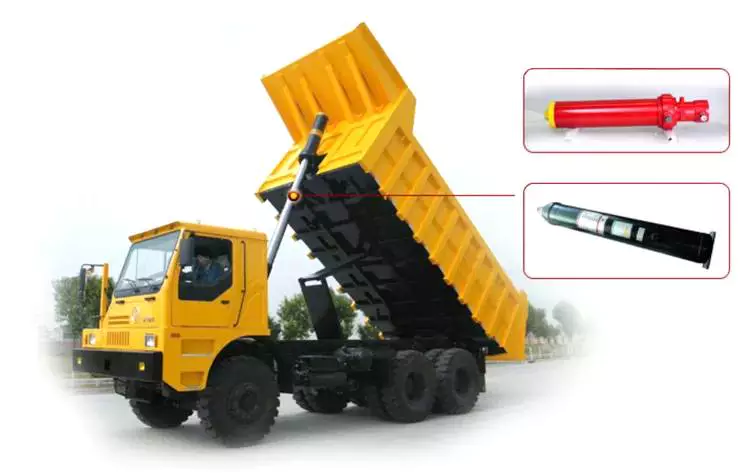
Can hydraulic cylinders be adapted for specialized applications like material handling?
Yes, hydraulic cylinders can be effectively adapted for specialized applications such as material handling. The versatility, power, and precise control offered by hydraulic cylinders make them well-suited for a wide range of material handling tasks. Hydraulic systems, including cylinders, are commonly used in industrial settings to lift, position, push, pull, and manipulate various types of materials. Here’s a detailed explanation of how hydraulic cylinders can be adapted for specialized material handling applications:
1. Lifting and Lowering:
– Hydraulic cylinders are commonly used for lifting and lowering heavy loads in material handling applications. By utilizing the force generated by hydraulic pressure, cylinders can provide the necessary power to lift and hold loads at different elevations. The precise control offered by hydraulic systems allows for accurate positioning of materials, ensuring efficient and safe lifting operations.
2. Pushing and Pulling:
– Hydraulic cylinders are capable of generating substantial pushing and pulling forces, making them ideal for applications that involve moving or manipulating materials. They can be used to push or pull heavy objects, control the movement of conveyors or rollers, or engage mechanisms for material transfer. The ability to exert high forces with precise control enables hydraulic cylinders to efficiently handle a variety of material handling tasks.
3. Tilting and Rotating:
– Hydraulic cylinders can be adapted to provide tilting and rotating functions in material handling equipment. By integrating cylinders into the design, equipment such as forklifts, cranes, or material handling arms can tilt or rotate to facilitate material placement or maneuvering. Hydraulic cylinders offer the required force and control to achieve smooth and controlled tilting or rotating motions, enhancing operational efficiency in material handling processes.
4. Gripping and Clamping:
– Hydraulic cylinders can be utilized to provide gripping and clamping functions for secure material handling. By incorporating specialized gripping or clamping mechanisms with hydraulic actuation, materials of various shapes and sizes can be securely held or clamped during transportation or processing. Hydraulic cylinders enable precise and adjustable gripping or clamping forces, ensuring the safe and reliable handling of materials.
5. Material Compaction and Forming:
– Hydraulic cylinders can be adapted for material compaction and forming applications. For example, in the production of bricks, hydraulic cylinders are used to apply high pressure and force to compact the raw materials into desired shapes. Similarly, in metal forming processes, hydraulic cylinders are employed to exert force on metal sheets or components, enabling precise shaping and forming operations.
6. Conveyor and Sorting Systems:
– Hydraulic cylinders can be integrated into conveyor and sorting systems to facilitate material movement and sorting. By incorporating hydraulic actuators, conveyor belts or sorting mechanisms can be efficiently controlled for optimal material flow and distribution. Hydraulic cylinders provide the necessary force and control to handle varying load capacities and adjust the speed and position of material transfer, improving the overall efficiency of handling and sorting operations.
7. Customized Designs:
– Hydraulic cylinders can be customized and adapted to meet specific requirements of specialized material handling applications. Engineers can design cylinders with unique dimensions, stroke lengths, mounting options, and sealing arrangements to fit into equipment or systems with specific space limitations or operating conditions. Customized hydraulic cylinders ensure optimal performance and compatibility for specialized material handling tasks.
In summary, hydraulic cylinders can be effectively adapted for specialized material handling applications, offering the necessary force, control, and versatility required in various material handling tasks. Whether it involves lifting and lowering, pushing and pulling, tilting and rotating, gripping and clamping, material compaction and forming, or integration into conveyor and sorting systems, hydraulic cylinders provide reliable and efficient solutions. Their adaptability, precise control, and ability to handle heavy loads make hydraulic cylinders a valuable component in optimizing material handling processes across different industries.
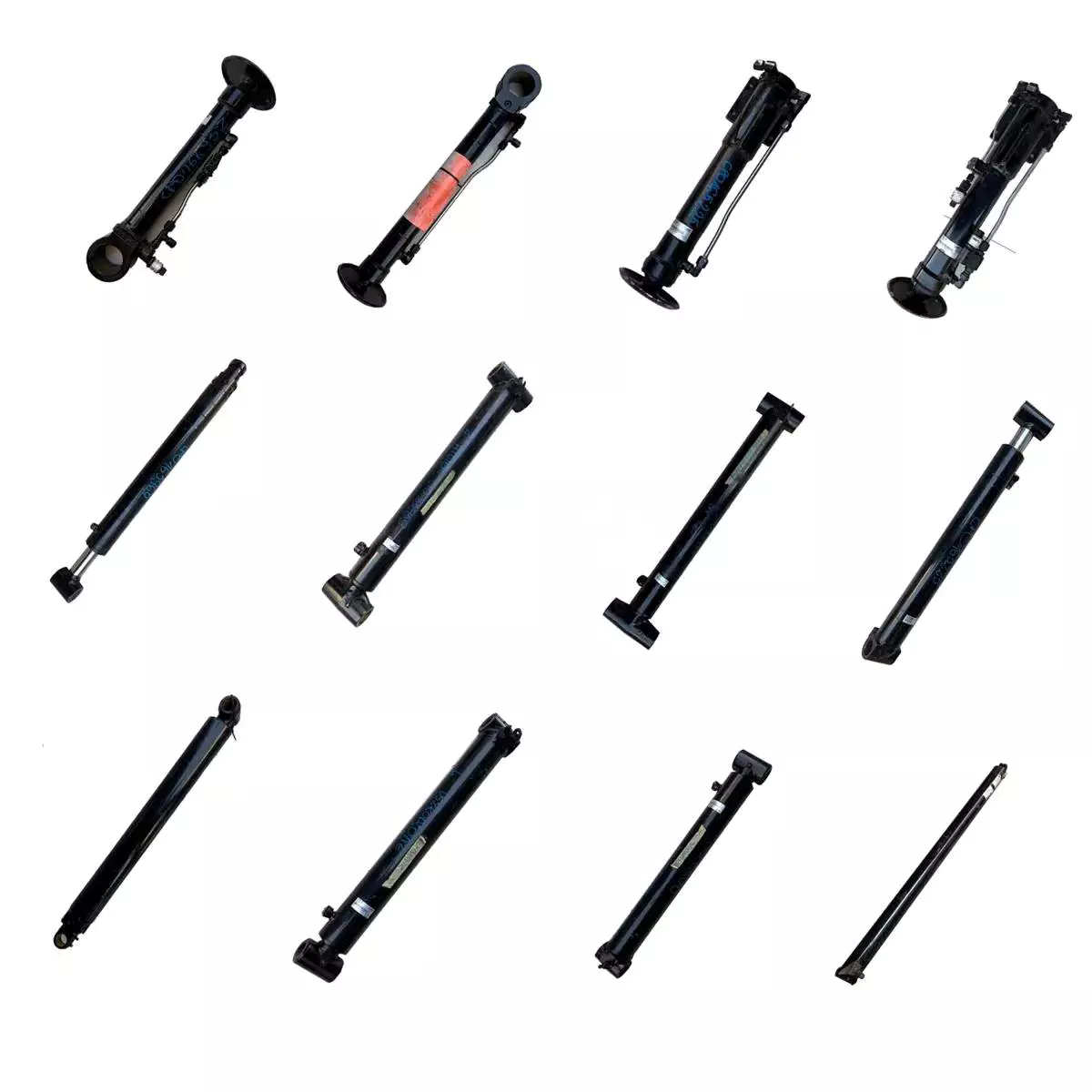
Ensuring Controlled and Safe Force Application in Heavy Machinery with Hydraulic Cylinders
Hydraulic cylinders play a critical role in heavy machinery by ensuring controlled and safe force application. The ability to exert and control high forces is essential for heavy machinery operations, such as lifting, pressing, pushing, or pulling heavy loads. Let’s explore how hydraulic cylinders ensure controlled and safe force application in heavy machinery:
- Force Control: Hydraulic cylinders provide precise force control capabilities. The hydraulic system’s pressure can be adjusted to regulate the force exerted by the cylinder. This control allows operators to apply the necessary force for a specific task while ensuring it remains within safe limits. By accurately controlling the force, hydraulic cylinders help prevent excessive force that could damage the machinery or compromise the safety of the operation.
- Load Balancing: In heavy machinery, multiple hydraulic cylinders are often used in conjunction to distribute and balance the applied force. By using multiple cylinders, the load can be evenly distributed across the machinery, minimizing stress concentrations and ensuring controlled force application. This load balancing approach enhances the stability and safety of the machinery, preventing uneven loading that could lead to structural issues or instability.
- Safety Valves: Hydraulic systems in heavy machinery are equipped with safety valves to protect against excessive force or overloading. Safety valves are designed to release hydraulic fluid from the cylinder when the force exceeds a predetermined threshold. This prevents the force from reaching dangerous levels, safeguarding the machinery and preventing potential accidents or damage. Safety valves provide an additional layer of safety and ensure controlled force application even in unexpected circumstances.
- Pressure Relief Systems: Hydraulic cylinders incorporate pressure relief systems to further enhance safety. These systems are designed to relieve excess pressure in the hydraulic system, which could occur due to factors such as thermal expansion or system malfunctions. By relieving excess pressure, the pressure relief systems prevent sudden and uncontrolled force surges, maintaining safe and controlled force application in heavy machinery.
- Structural Integrity: Hydraulic cylinders are designed to withstand the high forces and loads associated with heavy machinery applications. The cylinders are constructed using robust materials, such as high-strength steel, and undergo rigorous testing to ensure their structural integrity. This ensures that the cylinders can safely handle the forces applied during heavy machinery operations without experiencing failures or deformations that could compromise the safety and controlled force application.
In summary, hydraulic cylinders ensure controlled and safe force application in heavy machinery through force control, load balancing, safety valves, pressure relief systems, and robust structural design. These features and design considerations enable operators to exert the necessary force while maintaining safety and preventing excessive loads or force surges. By incorporating hydraulic cylinders into heavy machinery, manufacturers can achieve controlled force application, enhance operational safety, and protect the machinery from damage or failure.
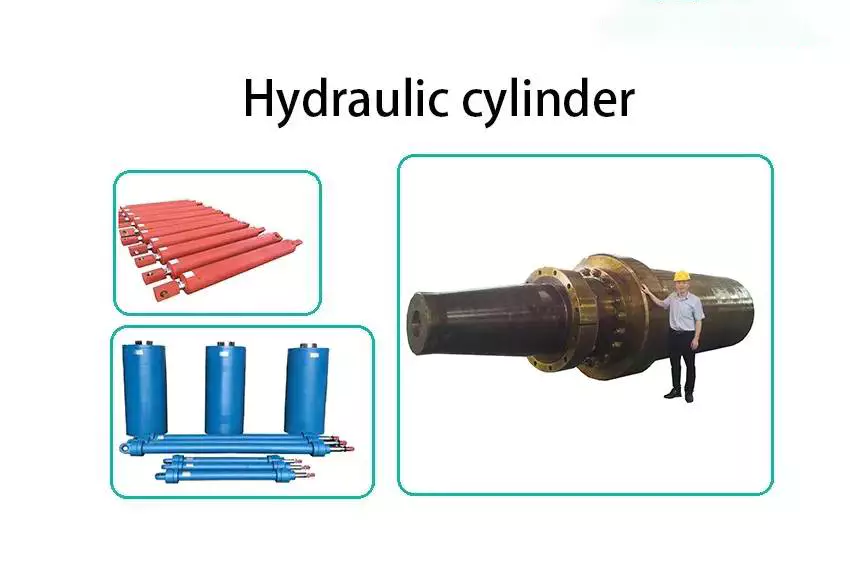
Как гидравлические цилиндры справляются с изменениями нагрузки и давления во время работы?
Гидравлические цилиндры предназначены для работы в условиях изменения нагрузки и давления, что делает их универсальными и эффективными в различных областях применения. Гидравлические системы используют принцип передачи усилия через несжимаемую жидкость для создания линейного движения. Ниже приведено подробное объяснение того, как гидроцилиндры справляются с изменениями нагрузки и давления:
1. Обработка грузов:
– Гидравлические цилиндры способны выдерживать различные нагрузки, используя принцип закона Паскаля. Согласно закону Паскаля, при воздействии давления на жидкость в ограниченном пространстве оно равномерно передается во всех направлениях. В гидравлическом цилиндре сила, приложенная к поршню, создает равное усилие на штоке цилиндра. Размер поршня и создаваемое им давление определяют силу, создаваемую цилиндром. Таким образом, гидравлические цилиндры могут выдерживать широкий диапазон нагрузок, регулируя давление жидкости.
2. Компенсация давления:
– Гидравлические системы оснащены механизмами компенсации давления для компенсации колебаний давления во время работы. Клапаны компенсации давления или регуляторы часто используются для поддержания постоянного давления в гидравлической системе независимо от изменения нагрузки. Эти клапаны автоматически регулируют расход или давление, обеспечивая стабильную и контролируемую работу гидроцилиндра. Компенсируя колебания давления, гидроцилиндры могут поддерживать стабильное выходное усилие и предотвращать повреждения или нестабильность, вызванные избыточным давлением.
3. Регулирующие клапаны:
– Регулирующие клапаны играют ключевую роль в управлении изменениями давления и нагрузки во время работы гидроцилиндра. Направляющие регулирующие клапаны, такие как золотниковые или тарельчатые клапаны, управляют потоком гидравлической жидкости, поступающей в цилиндр и выходящей из него, обеспечивая точное управление выдвижением и втягиванием цилиндра. Регулируя положение регулирующего клапана, можно регулировать скорость и усилие, развиваемое гидроцилиндром, в соответствии с требованиями к нагрузке и давлению в конкретной области применения. Регулирующие клапаны позволяют эффективно управлять изменениями нагрузки и давления, обеспечивая точное управление гидравлической системой.
4. Аккумуляторы:
– Гидроаккумуляторы часто используются для компенсации колебаний давления и нагрузки. Гидроаккумуляторы хранят гидравлическую жидкость под давлением, которое может быть сброшено или отпущено по мере необходимости для компенсации резких изменений нагрузки или давления. При уменьшении нагрузки на гидроцилиндр гидроаккумулятор высвобождает накопленную жидкость для поддержания давления и предотвращения скачков. И наоборот, при увеличении нагрузки на гидроцилиндр гидроаккумулятор поглощает избыток жидкости для поддержания стабильности системы. Благодаря использованию гидроаккумуляторов гидроцилиндры могут эффективно справляться с колебаниями нагрузки и давления, обеспечивая плавную и контролируемую работу.
5. Системы обратной связи и контроля:
– Современные гидравлические системы могут включать в себя системы обратной связи и управления для мониторинга и регулировки работы гидроцилиндров в режиме реального времени. Датчики положения или давления обеспечивают обратную связь по положению цилиндра, усилию и давлению, позволяя системе управления непрерывно корректировать работу для оптимизации производительности. Эти системы могут автоматически адаптироваться к изменениям нагрузки и давления, обеспечивая точное управление и эффективную работу гидроцилиндра.
6. Проектные соображения:
– Правильный выбор конструкции, такой как выбор подходящего размера цилиндра, диаметра поршня и штока, имеет решающее значение для работы с колебаниями нагрузки и давления. Конструкция должна учитывать максимально ожидаемые нагрузки и давления, чтобы гарантировать работу гидроцилиндра в заданном диапазоне. Кроме того, выбор подходящих уплотнений, материалов и компонентов, способных выдерживать предполагаемые колебания нагрузки и давления, имеет решающее значение для обеспечения надежности и долговечности гидроцилиндра.
Используя принципы работы гидравлических систем, включая механизмы компенсации давления, регулирующие клапаны и гидроаккумуляторы, а также системы обратной связи и управления, гидроцилиндры могут эффективно справляться с изменениями нагрузки и давления во время работы. Эти особенности и конструктивные решения позволяют гидроцилиндрам адаптироваться и оптимально работать в широком диапазоне областей применения и условий эксплуатации.


editor by CX 2023-10-19