Welded and tie-rod cylinders both create linear force, but construction changes package, mounting and service approach. Choose from machine constraints rather than a claim that one is universally better.
Welded: Compact Mobile Packaging
Welded bodies support compact clevis, eye and through-hole arrangements where external tie rods would consume envelope or collect debris.
Tie-Rod: Industrial Service-Oriented Construction
Tie rods clamp the head, barrel and cap and suit machinery where service access and defined mounting practice matter.
Compare Interfaces Before Architecture
For replacement work, retracted length, stroke, mountings and ports usually decide feasibility first.
Pressure Class Is Not the Whole Decision
Rod buckling, side load, shock and end-of-stroke behavior matter for either construction.
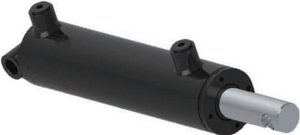
EP-WP Series 3000 PSI Welded Through-Hole Hydraulic Cylinder
EP-WP welded through-hole cylinder series with model dimensions, pressure, column-load and port data.
EP-WAC Series 3000 PSI Adjustable Clevis Hydraulic Cylinder
EP-WAC adjustable-clevis welded cylinder series with model dimensions, pressure, load and port data.
EP-TR Series 3000 PSI Tie-Rod Hydraulic Cylinder
EP-TR tie-rod hydraulic cylinder series with bore/stroke, mounting, column-load and port data.
EP-WC Series 3000 PSI Welded Clevis Hydraulic Cylinder
EP-WC welded female-clevis cylinder series with model dimensions, pressure, column-load and port data.
Frequently Asked Questions
Is welded always mobile?
No; choose from package, environment and service needs.
Is tie-rod always easier to repair?
Serviceability depends on design, parts and damage.
Can one replace the other?
Only after every interface and duty requirement is checked.
Which is more compact externally?
Welded construction often avoids external tie rods.
What should I compare first?
Stroke, closed length, mounts, bore/rod, ports and duty.
Discuss Your Hydraulic Requirement
Send bore, stroke, mounting, pressure, ports, load and duty details. For replacements, include photos and critical measurements.